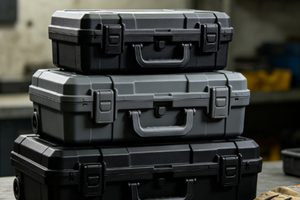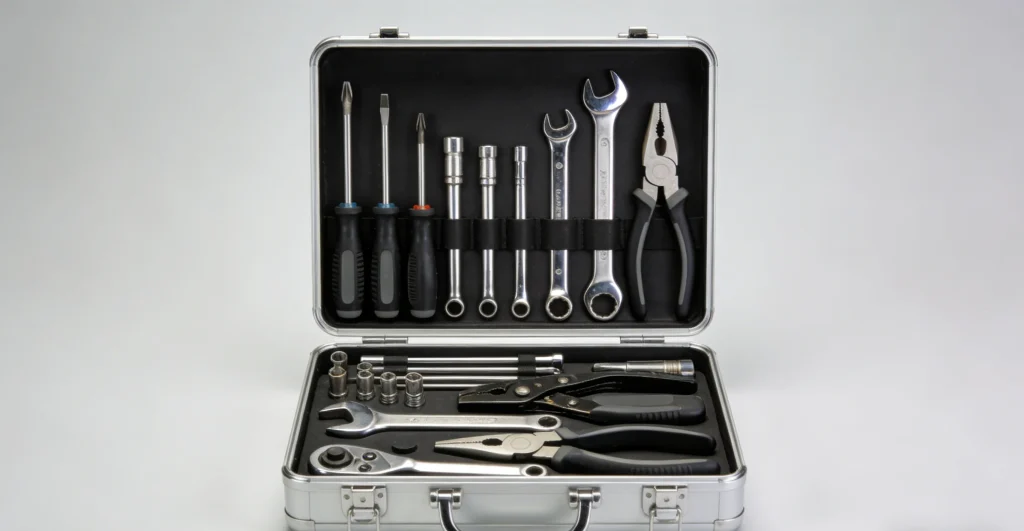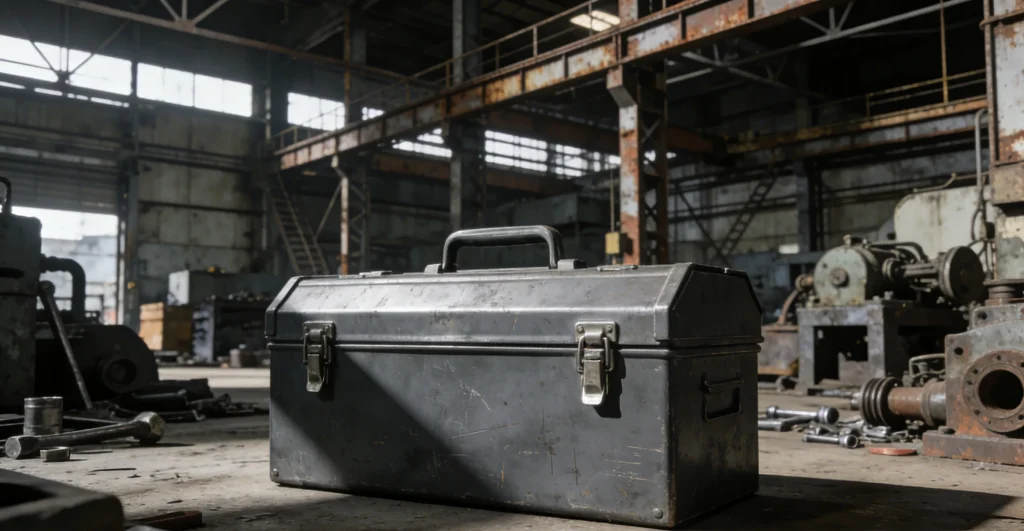
In modern maintenance, industrial production, and home DIY environments, the variety of tools is constantly expanding. Consequently, traditional toolboxes are increasingly struggling to meet current demands regarding storage efficiency, organizational capabilities, and portability. In practice, many users frequently encounter issues such as tools being jumbled together, difficulty in locating specific items, and inefficient use of space all of which lead to a decline in overall work efficiency. Through structured partitioning and modular assembly designs, modular toolboxes bring greater clarity and order to tool management. They enhance the efficiency of tool retrieval and optimize space utilization, thereby ensuring smoother and more efficient operations across a wide range of scenarios. As the demand for professional maintenance and home tool usage continues to rise, modular toolboxes are rapidly emerging as the superior solution for efficient tool management.
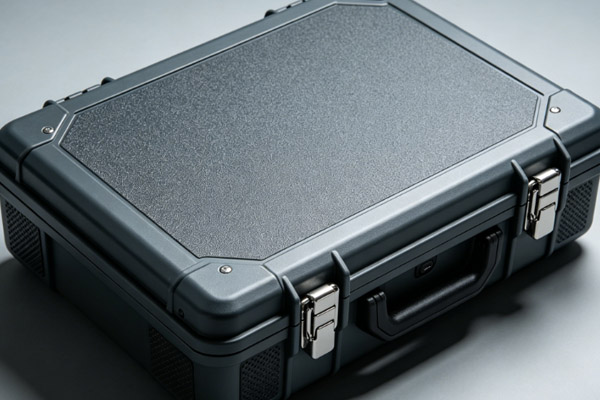
The Growing Importance of Modular Toolboxes
As tool collections continue to grow, modular toolboxes have evolved from mere storage containers into essential components of a highly efficient tool management system.
Enhancing Tool Usage Efficiency: Minimizing Search Time
During actual maintenance or construction tasks, tools that are not properly categorized often result in a significant amount of wasted time spent searching.
- Centralized Management of High-Frequency Tools: Storing frequently used items such as wrenches, screwdrivers, and power tools in a central location allows for quick access during use, reduces repetitive rummaging, and boosts operational efficiency.
- Categorized Storage Reduces Clutter: Partitioning tools by type for instance, keeping power tools, hand tools, and small accessories in separate sections creates a clearer and more organized overall structure.
- Fixed Locations Boost Efficiency: Consistently storing tools in designated spots helps establish stable usage habits, which can significantly reduce operational time and accelerate the overall work pace.
A well-structured tool management system can demonstrably improve both work efficiency and operational fluidity.
Minimizing Tool Damage and Loss Risks: Enhancing Management Quality
Many instances of tool damage or loss can be traced back to improper storage methods.
- Independent Compartments Prevent Collisions: Storing different tools in separate compartments prevents them from bumping against one another thereby avoiding wear and tear and extends their useful lifespan.
- Centralized Management of Small Accessories: Using compartmentalized organizers for small items such as screws and washers prevents them from scattering or getting lost.
- Standardized Storage Habits Improve Management Quality: The long-term use of a modular toolbox fosters consistent storage habits, which ultimately leads to higher overall standards of tool management.
A systematic approach to storage can significantly reduce the risk of tool damage and management-related complications.
How to Configure a Modular Toolbox Effectively
The true advantage of a modular toolbox lies not merely in its storage capacity, but more importantly in the soundness of its structural design.
Modular Partitioning Design: Building a Coherent Tool System
A well-organized partitioning structure is the key to enhancing tool management efficiency.
- Power Tool Zone: Equipment such as electric drills and angle grinders are stored separately to prevent entanglement with other tools, thereby improving safety and tidiness.
- Hand Tool Zone: Commonly used tools such as wrenches and pliers are centrally organized to facilitate quick access and boost daily maintenance efficiency.
- Small Parts Zone: Small accessories such as screws and drill bits are managed using compartmentalized bins to prevent clutter and loss.
- Emergency Tool Zone: Backup tools and emergency repair kits are stored in a centralized location to accelerate response times during unexpected situations.
Logical partitioning makes the entire tool system more intuitive and easy to navigate.
Materials and Structural Design: Shaping the Long-Term User Experience
The structural quality of the toolbox itself directly impacts its service life and user experience.
- Impact-Resistant Design: Minimizes tool damage during handling or transport, thereby enhancing overall safety.
- Layered Structure: A multi-tier design maximizes space utilization and makes tool classification more intuitive.
- Dust Protection: Prevents dust ingress that could compromise tool performance, making it ideal for long-term storage environments.
- Reinforced Structure: Enhances overall load-bearing capacity, making the toolbox suitable for heavy-duty applications.
Robust structural design is the cornerstone of long-term operational stability.
Modular Toolbox Solutions Tailored to Different Scenarios
Modular toolboxes can be flexibly adapted to specific usage scenarios to meet diverse requirements.
Industrial and Maintenance Settings: Emphasizing Professionalism and Capacity
Industrial environments involve a wide variety of tools, placing higher demands on storage systems.
- Multi-Module Integration: Combining different modules enables categorized tool storage, thereby boosting work efficiency.
- High-Strength Structural Support: Designed to withstand prolonged, high-frequency use while ensuring stability and durability.
- Rapid Mobility: Facilitates multi-station operations within a workshop environment, improving overall workflow efficiency.
Professional settings prioritize high efficiency and superior load-bearing capabilities.
Home DIY and Garage Use: Emphasizing Flexibility and Convenience
Home users typically prioritize space utilization and ease of use.
- Compact and Flexible Storage: Ideal for home garages or storage areas, minimizing floor space requirements.
- Centralized Management of Essential Tools: Focuses on storing only high-frequency tools to streamline daily usage.
- Portable Structural Design: Facilitates easy movement between different areas, enhancing operational flexibility.
Home environments prioritize a blend of lightweight design and practical functionality.
The Long-Term Value of Modular Toolboxes
Modular toolboxes not only resolve immediate issues but also possess inherent capabilities for long-term expansion.
Expandable Structure: Adapting to Growing Tool Collections
As the number of tools increases, there is no need to replace the entire system.
- Flexible Module Addition: Storage capacity can be expanded according to specific needs, adapting to requirements at different stages of use.
- Reduced Replacement Costs: Eliminates the need to replace the entire toolbox unit, thereby saving on long-term investment.
- Continuous Structural Optimization: The internal layout can be continuously adjusted to suit individual usage habits.
This expandability endows the tool storage system with greater long-term value.
Durable Design: Enhancing Overall Service Life
The structural design and choice of materials determine the toolbox’s long-term stability.
- High-Strength Materials: Ensures the unit remains free from deformation during prolonged use, thereby enhancing overall stability.
- Optimized Rail System: Facilitates smooth and effortless drawer operation, significantly improving the user experience.
- Pressure-Resistant Structure: Capable of withstanding heavy loads and demanding environments, boosting overall reliability.
This durable design makes the toolbox suitable for use in a wider range of complex scenarios.
Through its modular structural design, systematic organization capabilities, and high-strength durability, the modular toolbox offers a highly efficient solution for modern tool management. Whether utilized in industrial maintenance, engineering construction, or home DIY environments, it significantly enhances both tool-handling efficiency and spatial utilization. Compared to traditional toolboxes, modular toolboxes boast superior expandability and adaptability, enabling them to effectively meet evolving storage requirements across various stages of use.