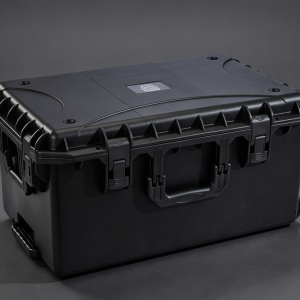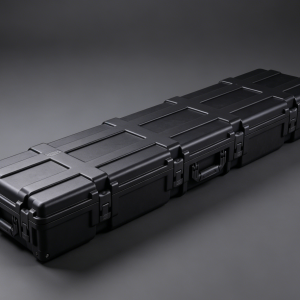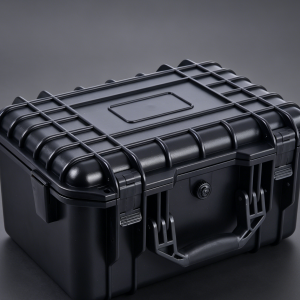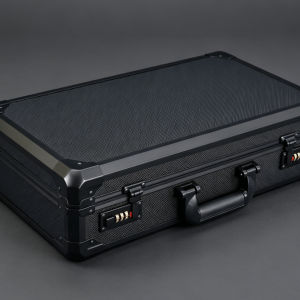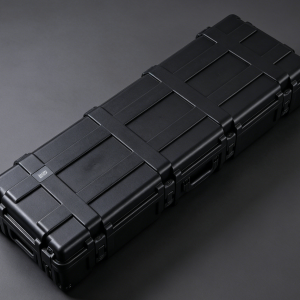
In industrial maintenance, engineering, equipment repair, and professional fieldwork, the number of tools can quickly increase. Small toolboxes may no longer provide enough storage space for a complete tool set. A large toolbox offers greater capacity, flexible organization, and strong load-bearing performance, making it suitable for storing hand tools, power tools, measuring instruments, and various accessories. When choosing a large toolbox, users should consider not only the external dimensions but also the internal dimensions, tool quantity, tool shape, and working environment.
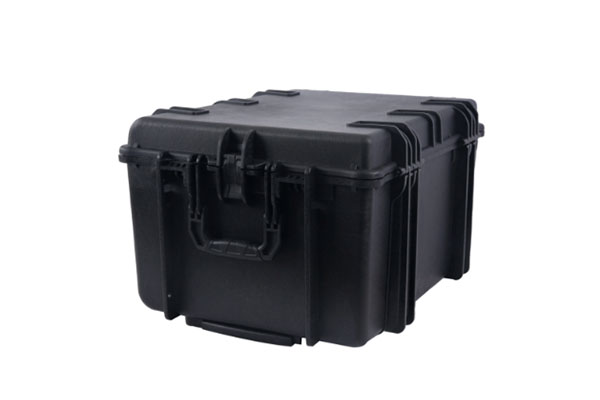
What Are the Typical Dimensions of a Large Toolbox?
External Dimensions vs. Internal Dimensions
Toolbox dimensions are usually described by length, width, and height. However, the external dimensions do not represent the actual usable storage space. Wall thickness, reinforcement structures, hinges, locks, trays, and other internal components can reduce the available space.
For this reason, users should pay close attention to the internal dimensions when selecting a large tool box. The internal space determines whether specific tools can fit properly, while external dimensions are more important for transportation, vehicle storage, and workspace requirements.
Large Toolboxes Do Not Have One Standard Size
There is no single standard size for a large toolbox. Products can vary considerably depending on their intended application. Common options include large portable toolboxes, rolling toolboxes, professional equipment cases, and customized tool storage cases.
Some large toolboxes may have a length of more than 600 mm, while larger professional cases can provide additional depth and height for power tools and equipment. Instead of choosing a toolbox simply based on the label “large,” it is better to compare the dimensions of the tools that need to be stored.
What Tools Can Be Stored in a Large Toolbox?
Wrenches, Sockets, and Screwdrivers
Large toolboxes are ideal for storing complete sets of hand tools, including adjustable wrenches, combination wrenches, ratchet wrenches, sockets, screwdrivers, pliers, and hex keys.
When there are many tools, trays, dividers, and foam inserts can be used to create separate storage areas. This prevents tools from being piled together and makes it easier to quickly locate the required item.
Power Tools and Maintenance Equipment
A large toolbox can also accommodate power tools such as drills, electric screwdrivers, angle grinders, compact cutting tools, chargers, and spare batteries.
These tools generally require more storage space. In addition to tool length, users should consider internal height and width. Tools with large handles, batteries, or additional accessories may require extra clearance to ensure that the toolbox can close properly.
Measuring and Inspection Instruments
For engineering and industrial maintenance professionals, large toolboxes can be used to organize measuring and inspection equipment such as tape measures, spirit levels, multimeters, thickness gauges, laser distance meters, and other testing instruments.
When storing precision instruments, a toolbox with foam inserts, individual compartments, or customized interiors can provide better protection. Proper positioning reduces contact between instruments and helps prevent damage caused by impact.
Plumbing, Electrical, and Maintenance Accessories
Electricians and maintenance technicians often need to carry many small components, including wire terminals, cables, bolts, nuts, fuses, electrical tape, connectors, and other accessories.
A large toolbox with adjustable dividers or removable storage compartments can separate large tools from small components. This makes the interior easier to organize and prevents small parts from becoming mixed together.
How to Choose a Large Toolbox Based on Tool Quantity
Measure the Longest Tool First
Before selecting a large toolbox, identify the longest tool in the collection. This could be a long-handled wrench, pry bar, long screwdriver, or power tool.
The internal length of the toolbox should be sufficient for the longest tool, with some additional clearance. This prevents tools from being forced into the case and ensures that the lid can close normally.
Consider the Total Volume of Your Tools
Measuring the longest tool is only the first step. If the toolbox needs to hold dozens or even hundreds of tools, the overall volume must also be considered.
For larger tool collections, look for toolboxes with multiple trays, adjustable dividers, modular inserts, or large storage compartments. Making better use of vertical space can significantly increase storage capacity without greatly increasing the toolbox footprint.
Leave Room for Future Tools
Tool collections often grow over time. Choosing a toolbox that is already completely full may create storage problems later.
Leaving some unused space allows users to add new tools without replacing the toolbox. It also reduces excessive stacking and makes individual tools easier to access.
What Features Should You Look for in a Large Toolbox?
Organized Storage Design
A good large toolbox is not simply a container with a large capacity. Its internal organization is equally important.
Adjustable dividers, removable trays, drawers, and modular foam inserts can create dedicated storage locations for different types of tools. This improves organization and makes daily work more efficient.
Shock, Dust, and Water Protection
If a toolbox will be used at construction sites, outdoor locations, or during transportation, protection performance should also be considered.
For precision instruments and electronic equipment, protective cases with sealing structures and cushioning interiors can help reduce the impact of dust, moisture, and transportation vibration.
Portability and Handling
A large toolbox can become heavy when filled with tools. Therefore, portability is an important consideration.
For technicians who frequently move between job sites, a rolling toolbox with wheels or a telescopic handle can make transportation easier. For workshops or fixed workstations, a large-capacity storage toolbox may be more suitable.
Typical Applications of Large Toolboxes
Large toolboxes are widely used in mechanical maintenance, electrical installation, automotive repair, engineering construction, industrial equipment maintenance, laboratory inspection, and outdoor fieldwork.
For mobile technicians, a large toolbox can hold a complete set of repair tools in one place. Engineering professionals can use it to transport measuring instruments and inspection equipment. Industrial companies can also customize the internal layout according to equipment dimensions and tool requirements.
Do Not Choose a Large Toolbox Based on Size Alone
The main value of a large toolbox is not simply its large capacity. It should provide an effective combination of tool organization, protection, accessibility, and portability.
When selecting a toolbox, compare internal and external dimensions, load capacity, storage compartments, protective performance, and transportation requirements.
For users storing standard hand tools, internal capacity and organization are key considerations. For power tools, internal height and depth are particularly important. For precision instruments, foam inserts, shock protection, and sealing performance should receive greater attention.
When choosing a large toolbox, start by measuring the size and quantity of the tools that need to be stored. Then consider the working environment, transportation requirements, internal organization, and protection features. The right large tool box can improve storage efficiency, simplify daily work, and provide reliable protection for valuable tools and equipment.