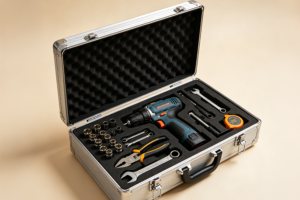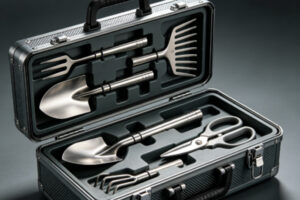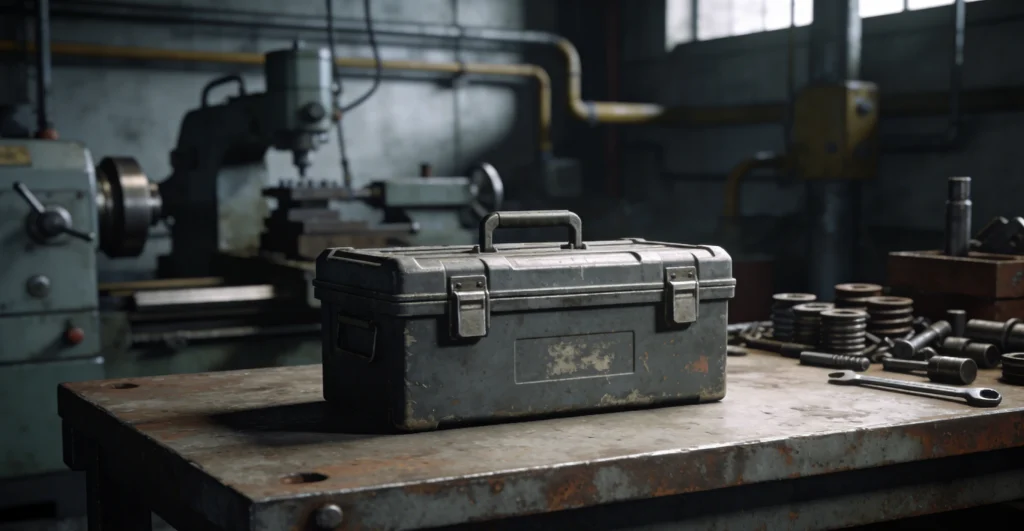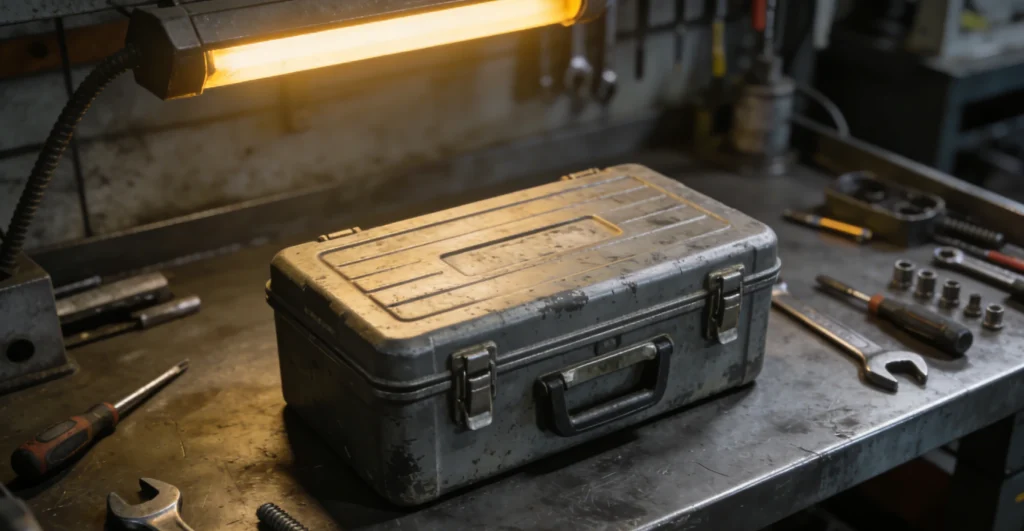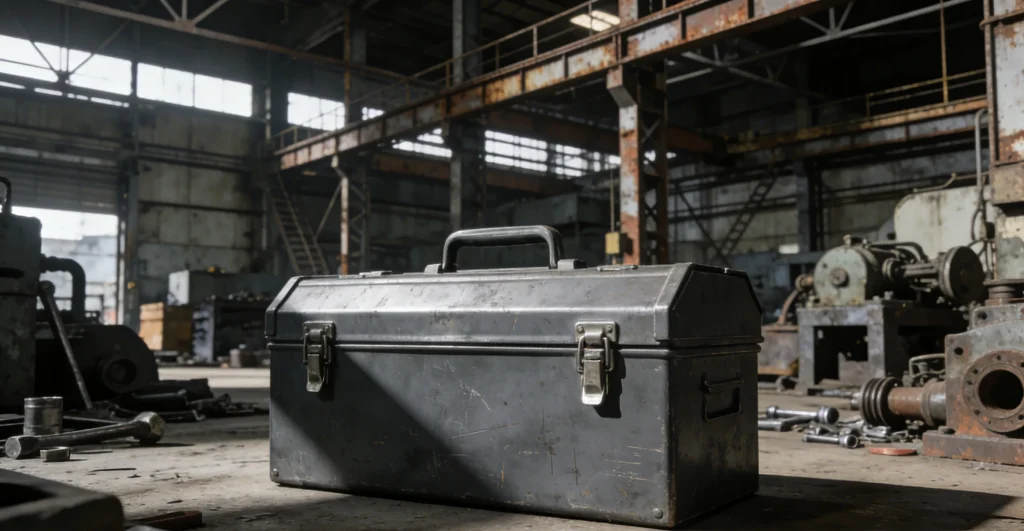
In high-frequency work environments such as repair workshops, automotive maintenance, equipment inspections, and construction sites, tools are numerous, varied, and highly mobile. Traditional toolboxes often struggle with insufficient storage, unclear categorization, and difficult transportation. Through a combined design of drawers, trays, box bodies, and accessory compartments, modular toolboxes make tool management more flexible and organized, while also making movement, expansion, and arrangement easier. They have gradually become a commonly used tool storage solution for professional users.
Modular Combination Brings Greater Flexibility
The core value of a modular toolbox lies in its detachable, stackable, and replaceable structure, which can be adjusted according to changing tasks.
More Freedom in Component Separation
Through detachable components, modular toolboxes allow different tools and tasks to find more suitable storage methods.
- Drawer modules, lid modules, and side-hanging modules can be combined according to the task.
- Frequently used tools and spare tools can be stored separately for more direct access.
- If a single module is damaged, it can be replaced individually, making maintenance easier.
This combination method allows the toolbox to maintain high practicality in different work scenarios.
Clearer Expansion Methods
When expanding, modular toolboxes follow a clear logic, allowing users to flexibly add configurations based on tool quantity and work content.
- When the number of tools increases, modules can be stacked for better space utilization.
- Different trades can use different combinations to reduce wasted space.
- When on-site tasks change, the box structure can be adjusted quickly.
This clear expansion method allows modular toolboxes to maintain a high level of adaptability in daily maintenance and mobile operations.
Classified Storage Improves Access Efficiency
The internal layout of modular toolboxes places greater emphasis on zoned management, keeping tools organized and making both retrieval and return more time-efficient.
More Intuitive Zoning Design
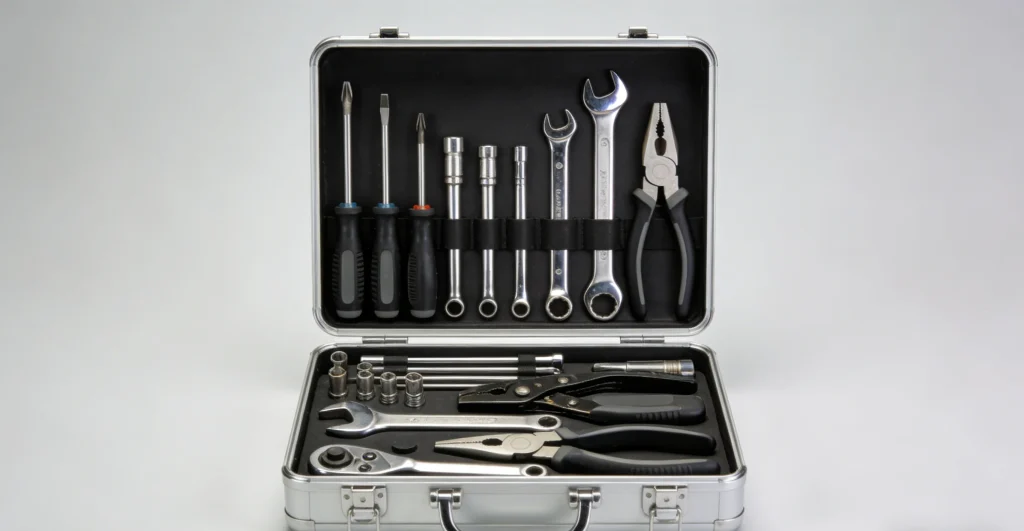
Through clear zoning, modular toolboxes give each type of tool a fixed position, making management much easier.
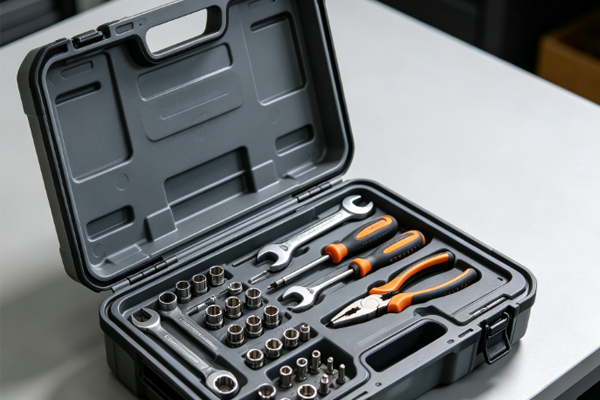
- Wrenches, pliers, and screwdrivers each have fixed positions.
- Small parts are stored in compartmentalized bins to prevent scattering.
- Label areas are clear, making searching faster.
An intuitive zoning design reduces the confusion caused by mixed tool storage and makes daily organization more efficient.
Smoother Access Process
Modular toolboxes are optimized in terms of access paths, making frequent operations more continuous and natural.
- Frequently used tools are placed on the upper layer or front side for quicker access.
- Deeper spaces are used for spare parts, creating clear layering.
- Smooth opening and closing make on-site operations more continuous.
A smoother access process reduces the time spent repeatedly searching and helps maintain a steadier work rhythm.
Portable Structure Balances Durability
Modular toolboxes not only emphasize storage, but also focus on mobility and stability during long-term use.
More Effort-Saving Mobility Design
Modular toolboxes are designed with mobility in mind, making them easier to carry and transfer in different environments.
- A combination of wheels, handles, and carry grips makes transportation easier.
- They can be used on workshop floors, warehouse aisles, and outdoor surfaces.
- They remain stable even when fully loaded.
This effort-saving mobility design allows the toolbox to maintain a good user experience even in high-frequency transport scenarios.
More Reliable Material Details
Modular toolboxes pay greater attention to durability in materials and connection details, making them suitable for long-term, high-intensity use.
- High-strength plastic or metal frames improve load-bearing capacity.
- Reinforced corners reduce damage from impacts.
- Components such as latches, slides, and hinges are more durable.
Reliable material details allow modular toolboxes to remain stable during long-term use.
Adaptability to Multiple Scenarios Enhances Professional Value
Modular toolboxes have a wide range of applications and can play a role in maintenance, construction, warehousing, and other scenarios.
More Efficient Use in the Maintenance Industry
In the maintenance industry, modular toolboxes help workers complete tool preparation and on-site operations more quickly. They can be rapidly adapted to scenarios such as auto repair, mechanical maintenance, and electrical inspections. Centralized tool management also reduces omissions, while the on-site service image appears more professional. This efficient maintenance adaptability makes modular toolboxes a highly practical management tool in professional operations.
More Practical in Construction and Warehousing Scenarios
Modular toolboxes also perform well in construction and warehousing environments, showing strong adaptability. They are convenient to carry on-site in construction settings, make warehouse inventory clearer, and are also suitable for long-term high-frequency use. This practical adaptability allows modular toolboxes to cover the needs of more industries.
Modular toolboxes combine flexible configuration, clear categorization, portable mobility, and durable structure, directly improving tool management efficiency and enhancing on-site work experience. SIPHIA BOX has long focused on tool storage solutions. More modular toolbox products can be found at siphiabox.com, offering more practical choices for maintenance, construction, and warehousing scenarios.