Mini toolboxes are increasingly used in home repairs, car emergencies, and everyday small tasks. The material chosen directly determines its lifespan and user experience. Some toolboxes crack, loosen latches, or deform after a period of use, while others maintain a stable structure for a long time. This difference mainly comes from the material itself. Faced with different types such as plastic, metal, and composite materials, many people tend to focus only on appearance or price when purchasing, neglecting the core factor of durability. To choose a more durable mini toolbox, it is necessary to consider the usage environment, load-bearing requirements, and structural design.
Durability of Plastic Mini Toolboxes
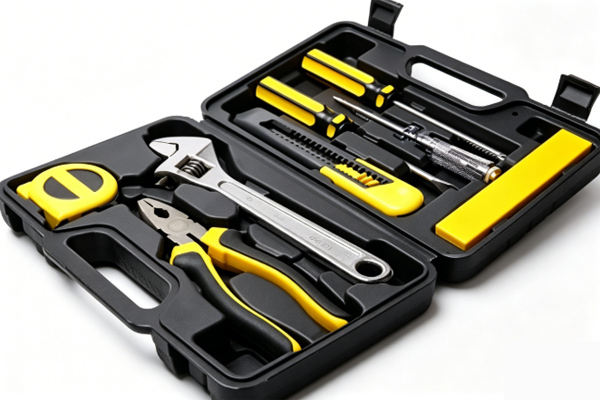
Plastic is one of the most common materials on the market. It is lightweight, portable, and suitable for daily household use. High-quality plastic toolboxes usually use engineering-grade ABS or polypropylene materials, which perform well in terms of impact resistance and toughness, and are not easily broken even from minor drops.
However, there is a significant difference in quality. Low-end plastics are prone to whitening and brittleness after prolonged use, especially noticeable in high-temperature or direct sunlight environments. For light household use, plastic toolboxes are sufficient. However, if frequently moved or used in a car for extended periods, special attention should be paid to material thickness and pressure-resistant design.
When purchasing, pay attention to the following:
- Whether the material is labeled as high-strength engineering plastic
- Whether the edges and corners are thickened
- Whether the buckles are smooth and have a springy feel.
Plastic materials tend to be more lightweight and durable than those designed for extreme strength.
Structural Stability of Metal Toolboxes
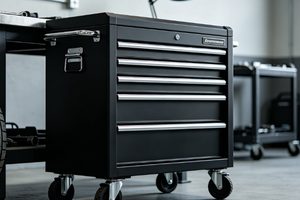
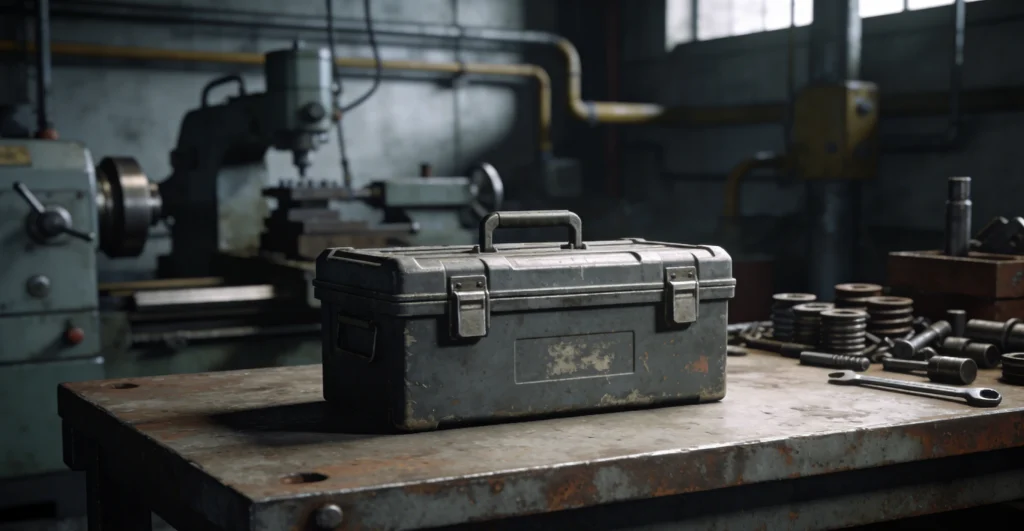
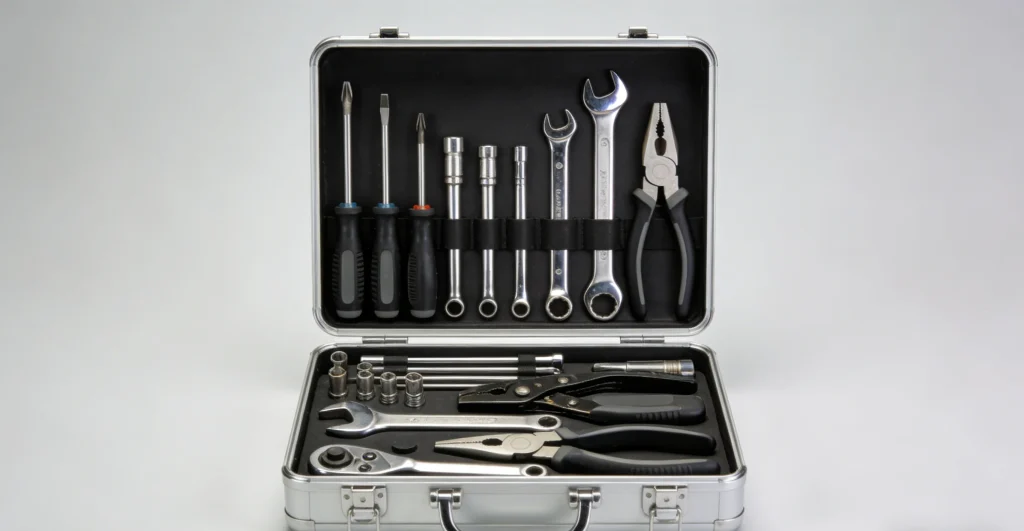
Metal toolboxes typically use aluminum alloy or steel structures, offering higher overall strength and significantly better pressure resistance than plastic types. They are suitable for scenarios involving heavy tools or high usage frequency. Even in frequent handling or complex environments, they maintain good structural stability.
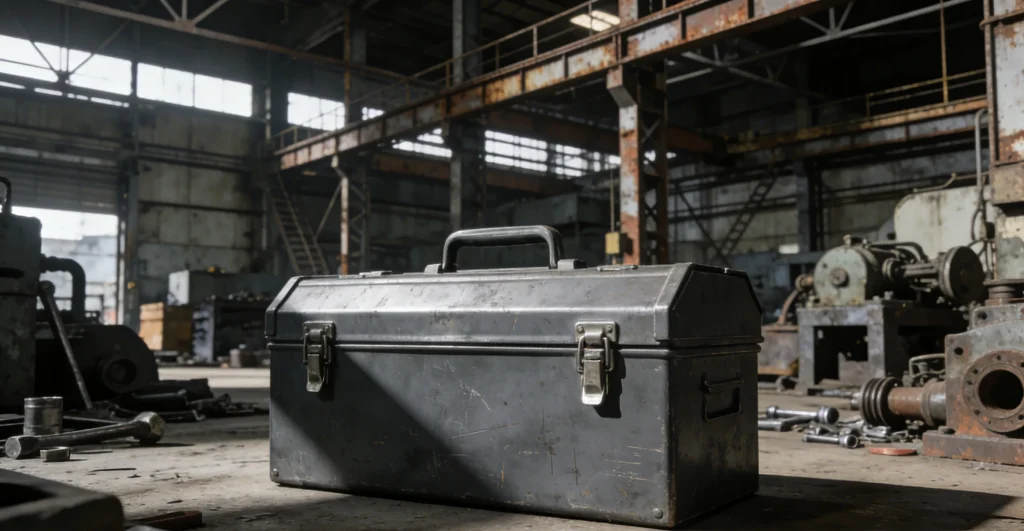
Aluminum alloy toolboxes are moderately heavy and rust-resistant, making them a popular choice. Steel toolboxes are more robust but heavier, making them less convenient to carry than aluminum alloy ones.
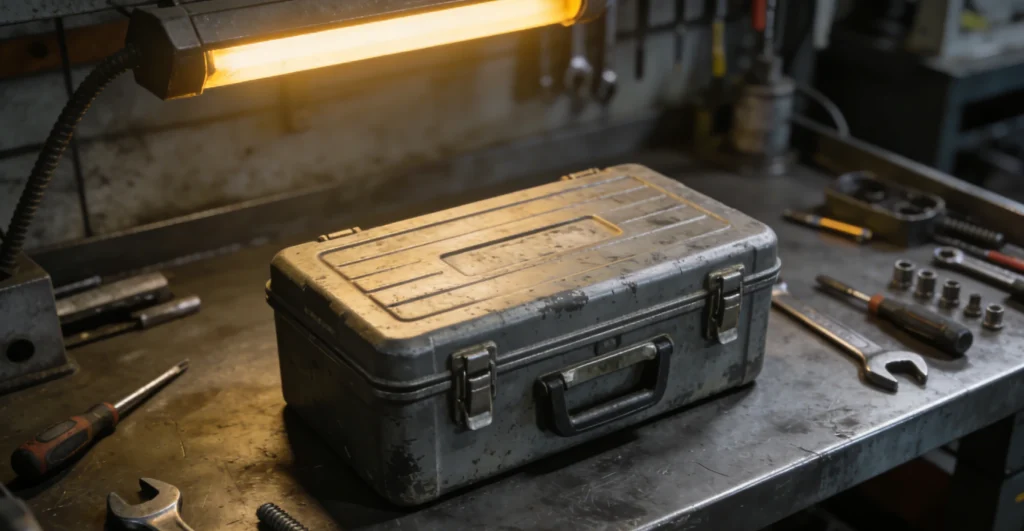
It’s important to note that the durability of metal toolboxes depends not only on the material itself but also on the surface treatment process, such as spraying and anti-corrosion coatings. If the surface treatment is inadequate, scratches or oxidation are likely to appear after long-term use.
Common judgment points include:
- Whether the surface has an anti-rust coating
- Whether the hinge connections are reinforced
- Whether there are obvious loose seams in the box body.
Metal materials are more suitable for environments with high durability requirements.
Balanced Performance of Composite Material Toolboxes
Composite materials typically combine the structural characteristics of plastic and metal, achieving a balance between weight and strength. The outer shell of such toolboxes may be made of high-strength plastic, while key load-bearing parts are reinforced with metal, making the overall structure more stable.
The advantage of this design is that it is neither as bulky as pure metal nor as impact-resistant as ordinary plastic, making it suitable for various everyday uses, such as home repairs and vehicle spare parts.
However, composite materials require high-quality manufacturing processes. If the design is not reasonable, problems such as loose connections or uneven stress can easily occur. When purchasing a toolbox, pay attention to the following:
- Whether the metal reinforcement is properly positioned
- Whether the shell and frame are tightly integrated
- Whether it has an anti-vibration structure design
Composite materials achieve a good balance between practicality and durability.
The Relationship Between Internal Structure and Durability
The durability of a toolbox is not only determined by the shell material, but also by its internal structure. A disorganized internal design will cause tools to collide during transportation, accelerating wear and tear.
A well-designed internal structure typically includes dividers, securing slots, and anti-slip features. These details reduce the impact of tool movement and distribute stress more evenly across the box.
Some high-quality designs also include cushioning materials or independent storage areas to further reduce wear.
Focus on observing:
- Whether it has a tool-locking design
- Whether the internal dividers are stable and not easily shifted
- Whether it has cushioning pads to reduce impact
A well-structured toolbox, even with ordinary materials, can have a longer lifespan.
The Impact of Usage Environment on Material Lifespan
The performance of the same material varies greatly under different environments. For example, high temperatures, humidity, or frequent handling can all affect the lifespan of a toolbox. Plastic materials are prone to softening in high temperatures, metal materials may corrode in humid environments, while composite materials depend on their specific structural design. If primarily intended for indoor home storage, lightweight plastic or composite materials are preferable; if used for vehicle or outdoor repairs, metal or reinforced composite structures are more suitable. Usage habits are equally important; avoiding overloading and drops can significantly extend the toolbox’s lifespan.