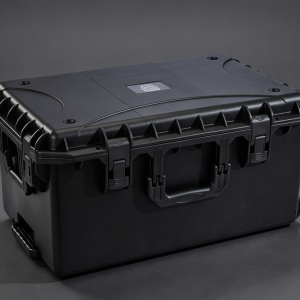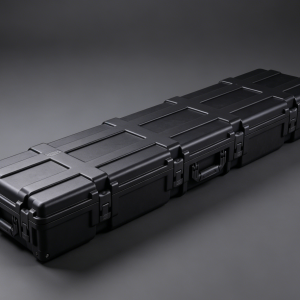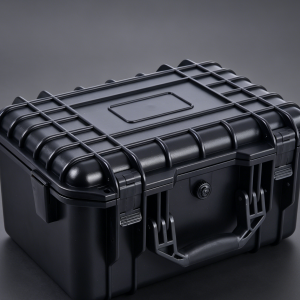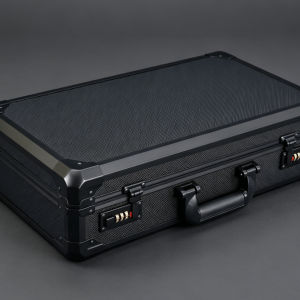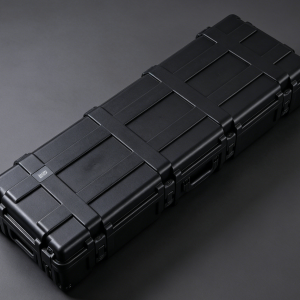
Turning aluminum sheets into a complete finished tool box requires multiple processing processes. Each process affects the box’s dimensions, strength, appearance, sealing performance, and service life. Therefore, although an aluminum tool box may appear structurally simple, actual production usually involves material cutting, stamping or bending, welding, grinding, surface treatment, and accessory installation. Common aluminum tool boxes use aluminum alloy sheets as the main material. The sheets are accurately cut according to the box dimensions, and bending is then used to form the box body and lid structures. Some products also include reinforcing ribs to improve overall stability. Depending on the design, box components can be connected through welding, riveting, or screw fastening, with different connection methods suitable for different structures. After the main body has been processed, surface treatment is also required to give the aluminum sheet a cleaner appearance while improving corrosion and wear resistance.
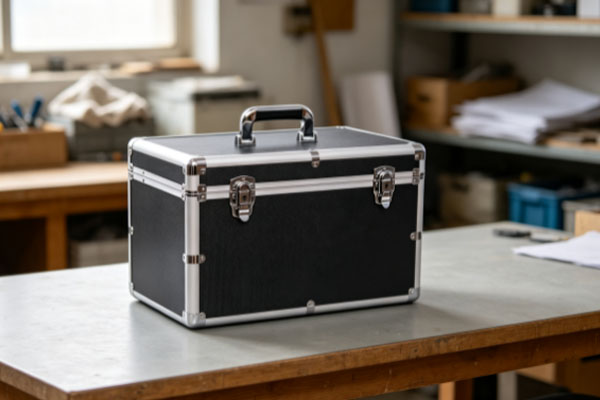
How Are Aluminum Sheets Processed into Tool Boxes?
Material Cutting
The basic process in aluminum tool box production is sheet cutting. The manufacturer determines the aluminum sheet dimensions according to the length, width, and height of the tool box, and then uses shearing machines, laser cutting equipment, or other processing equipment for material cutting. The cutting dimensions need to remain accurate; otherwise, errors may occur during subsequent bending and assembly. For tool boxes produced in batches, consistent cutting dimensions can also reduce dimensional differences between different products.
Bending and Forming
After the aluminum sheet is cut, it needs to be bent according to the design drawings. The box edges, lid, bottom, and connection areas may all require bending. A properly designed bending structure can increase box rigidity while reducing the number of additional components required. The bent edges of truck tool boxes can also form reinforcing structures, making the box less likely to experience significant deformation when subjected to external pressure.
What Processes Are Used to Connect the Box Components?
Welding
Welding can connect aluminum alloy components into a relatively stable overall structure. Common aluminum alloy welding methods include TIG welding. After welding is completed, the weld seams need to be inspected and treated to avoid obvious defects. For tool boxes requiring higher sealing performance, welding quality is particularly important. If there are problems with the box weld seams, the overall protective performance may be affected.
Riveting and Screw Fastening
Not all aluminum tool boxes are welded. Some boxes are fixed using rivets, while other products are assembled using screws, connectors, and other methods. Riveting is convenient to perform and is suitable for certain thin-sheet structures. Screw connections are convenient for subsequent disassembly and maintenance, providing certain advantages for tool boxes that require partial structural or accessory replacement.
How Are the Surface and Details Processed?
Grinding
After aluminum sheets are cut, bent, and welded, some areas may have burrs or visible welding marks. Processing personnel need to grind and finish these areas. Grinding can not only improve the appearance of the tool box but also reduce the risk of sharp edges causing injuries to workers.
Surface Treatment
Aluminum tool boxes can undergo different surface treatments according to product requirements. Common methods include anodizing, spraying, and powder coating. Silver aluminum tool boxes usually retain a more noticeable metallic appearance, while colored products such as black and blue can be achieved through coating processes. If the tool box is used outdoors for long periods, an appropriate surface treatment process should be selected according to the actual operating conditions.
Common processing processes for aluminum tool boxes:
Cutting and forming: Complete aluminum sheet cutting, punching, and bending.
Connection and assembly: Secure the box body through welding, riveting, or screws.
Surface treatment: Improve the surface finish through grinding, spraying, anodizing, and other processes.
Accessory installation: Install locks, hinges, sealing strips, handles, and foot pads.
How Do Different Processes Affect Tool Box Performance?
Dimensional Accuracy
The length, width, and height of the tool box need to match the actual installation space. If cutting or bending errors are significant, the lid may become unevenly installed or fail to close properly. For tool boxes that need to be installed on truck frames, dimensional accuracy is even more important because the available installation space is usually limited.
Load-Bearing Capacity and Stability
The stability of the box structure is closely related to aluminum sheet thickness, bending design, and reinforcing rib design. Simply increasing the sheet thickness can improve strength, but it also increases the weight of the tool box. Proper bending structures and reinforcing ribs can improve box stability while keeping weight under control.
Sealing Performance
After the sealing strip is installed, it is necessary to check whether the door and box body can make even contact. If the door is deformed or the hinge position is inaccurate, gaps may occur even when a high-quality sealing strip is used. Therefore, processes such as welding, bending, and assembly can also indirectly affect the sealing performance of the tool box.
Common processing processes for aluminum tool boxes include aluminum sheet cutting, punching, bending, welding, riveting, grinding, surface treatment, and accessory assembly. Different processes serve different purposes. From the initial material processing to the final box assembly, every stage affects the finished product. Cutting determines the basic dimensions, bending affects the box structure, welding and riveting determine connection strength, grinding improves the condition of edges and weld seams, and surface treatment affects appearance and durability. After the box body is completed, accessories such as locks, hinges, sealing strips, handles, and foot pads also need to be accurately installed. For ordinary storage tool boxes, processing requirements mainly focus on dimensional accuracy and structural strength. For truck tool boxes, additional factors such as vehicle vibration, outdoor rainwater, mud, sand, and friction caused by long-term use need to be considered. If the tool box is used for industrial maintenance, an appropriate aluminum sheet thickness and reinforcing structure also need to be selected according to the weight of the tools stored inside.