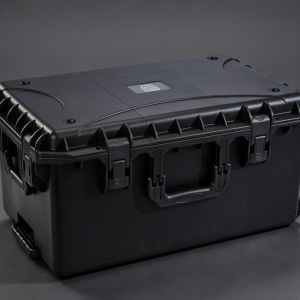
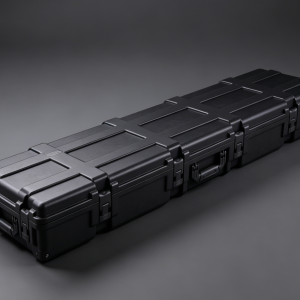
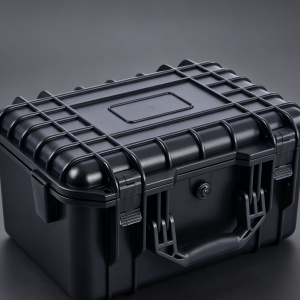
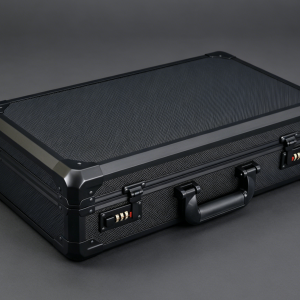
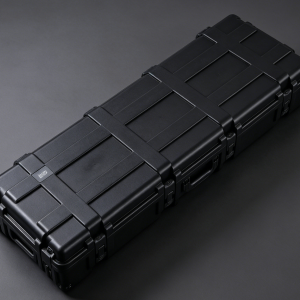
A large-capacity plastic toolbox is suitable for maintenance technicians, installers, engineering workers, and home users who need to carry a relatively large number of tools. Compared with compact toolboxes, large-capacity models usually provide more spacious internal storage and can accommodate hand tools, power tools, measuring equipment, and various repair accessories. Choosing the right large plastic toolbox can reduce the inconvenience caused by storing tools in separate containers and keep commonly used equipment together in one portable storage unit. For automotive maintenance, plumbing and electrical installation, mechanical repair, electronics maintenance, and outdoor work, a large toolbox can provide sufficient storage space while using trays, compartments, and dedicated slots to organize tools of different sizes. Matching the toolbox to the dimensions, weight, and frequency of use of the tools can help users make better use of its storage capacity.
What Hand Tools Are Suitable for a Large-Capacity Plastic Toolbox?
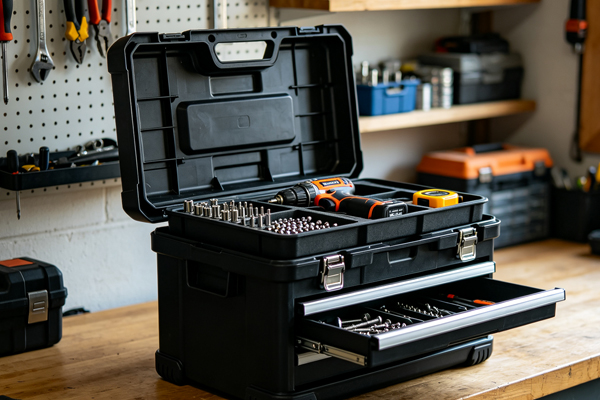
Hand tools are among the most common items stored in a large-capacity plastic toolbox. Since these tools come in many different sizes and shapes, they require sufficient internal space for practical organization. Wrenches, adjustable wrenches, socket sets, ratchet wrenches, screwdrivers, pliers, hammers, hex keys, and similar tools can all be stored in a large toolbox. Long wrenches and screwdrivers can be positioned along the length of the toolbox, while larger items such as pliers and hammers can be placed in the bottom storage area. Small wrenches and screwdriver bits can be organized using trays or dividers. For maintenance workers who own complete tool sets, a large-capacity plastic toolbox can keep an entire set of equipment together and reduce the need to search through several separate containers. The larger internal space also makes it easier to arrange tools according to their dimensions, allowing the toolbox to hold more equipment while maintaining convenient access.
What Power Tools and Measuring Equipment Can Be Stored in a Large Plastic Toolbox?
As power equipment becomes more common in repair and maintenance work, toolboxes need sufficient storage space for power tools and their accessories. Some large-capacity plastic toolboxes can accommodate drills, cordless screwdrivers, compact electric grinders, batteries, and chargers, although the actual capacity depends on the internal dimensions of the toolbox and the size of the equipment. Measuring equipment such as multimeters, voltage testers, measuring tapes, vernier calipers, and spirit levels can also be stored in a large toolbox. Power tools are often relatively heavy, so heavier equipment should be placed at the bottom to maintain stability during transportation. Measuring devices should preferably be stored in separate compartments to reduce the risk of contact with metal tools. For technicians who need to carry both power tools and measuring equipment, a large-capacity plastic toolbox can reduce the need for multiple storage containers and make the complete equipment set easier to transport.
What Small Repair Accessories Are Suitable for a Large-Capacity Plastic Toolbox?
In addition to standard tools, large-capacity plastic toolboxes are also suitable for storing many small repair accessories. Screws, nuts, washers, expansion bolts, electrical terminals, cable connectors, seals, and various installation components are small and can easily become scattered when placed directly inside the main compartment. A large-capacity plastic toolbox equipped with individual compartments, removable trays, or small storage boxes can keep these loose components organized by size and specification.
- Fasteners: Screws, nuts, washers, and bolts can be sorted by size and specification for faster access during installation and repair work.
- Electrical accessories: Terminals, cable lugs, connectors, and small switches can be stored in dedicated compartments to prevent them from becoming mixed with larger metal tools.
- Plumbing components: Fittings, sealing rings, clamps, and other small plumbing accessories can be stored together for convenient transportation to maintenance sites.
- Replacement parts: Small springs, washers, clips, and specialized replacement components can be stored separately to reduce the risk of loss.
- Consumables: Electrical tape, cable ties, small pieces of sandpaper, blades, and other maintenance consumables can be organized using available storage space inside the toolbox.
With dedicated storage areas, a large-capacity plastic toolbox can accommodate not only large tools but also numerous small accessories, creating a more complete and organized maintenance equipment system.
How Should a Large-Capacity Plastic Toolbox Be Selected for Different Repair Applications?
Different work environments have different requirements for toolbox capacity and internal configuration. Automotive maintenance usually involves socket sets, ratchet wrenches, torque tools, screwdrivers, pliers, and diagnostic equipment, making a large-capacity toolbox with a spacious bottom compartment and strong load-bearing capability a practical choice. Plumbing and electrical installers may need wrenches, pipe wrenches, screwdrivers, measuring tools, fittings, and sealing accessories, so models with trays and separate small compartments can be useful. Mechanical maintenance often involves numerous metal tools and precision equipment, making toolbox load capacity and internal protection important considerations. Electronics repair commonly requires small screwdrivers, tweezers, multimeters, cables, and precision components, so a toolbox with clearly separated storage areas and multiple compartments can be more suitable. For outdoor installation and engineering maintenance, a large-capacity plastic toolbox should also balance portability, structural strength, dust resistance, and moisture resistance so that tools can remain protected in demanding working environments.
What Should Be Considered When Storing Tools in a Large-Capacity Plastic Toolbox?
A large storage capacity does not mean that all tools should simply be stacked together. Heavy tools should be placed at the bottom of the toolbox to keep the center of gravity low, improve carrying stability, and reduce pressure on lighter tools. Precision measuring equipment and easily damaged tools should have dedicated storage positions and should preferably be kept away from direct contact with metal tools such as wrenches and hammers. Batteries and chargers for power tools should also be stored according to the equipment manufacturer’s requirements and protected from contact with sharp objects. Small components are best kept in lidded containers or individual compartments to prevent them from scattering during transportation. After the toolbox is fully loaded, users should make sure that the lid can close properly, the locking mechanism can secure the box reliably, and the handle is suitable for carrying the total weight. For long-term use, the toolbox should be cleaned regularly to remove dust and debris, while the trays, hinges, locks, and handles should be inspected to ensure they remain in good condition. Selecting a large-capacity plastic toolbox according to tool weight, dimensions, quantity, and working environment can provide centralized storage for a larger range of equipment while maintaining convenient transportation, effective protection, and practical everyday use.