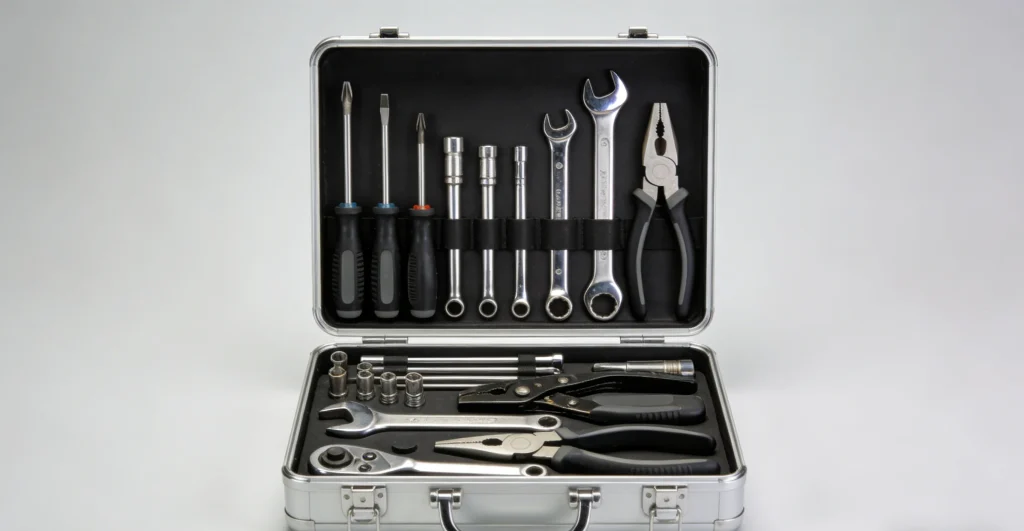
A tractor truck tool box is mainly used to store wrenches, screwdrivers, sockets, jack accessories, fasteners, repair supplies, and small tools needed for daily vehicle inspections. Since normal movement space needs to be maintained between the tractor cab, frame, fifth wheel, and trailer, the installation location should be determined according to the frame structure, chassis height, vehicle steering, trailer connection, and frequency of tool use. Choosing a suitable installation location can make full use of the vehicle’s existing space while reducing the possibility of tools moving, colliding, or becoming exposed to moisture during driving.
Common installation locations include the sides of the frame, behind the cab, near the fifth wheel, and unused areas on both sides of the chassis. Different vehicle models have different chassis structures, so the tool box size, door-opening direction, and mounting method also need to be adjusted accordingly. Before installation, make sure the tool box will not interfere with fifth wheel movement, kingpin connection, vehicle steering, or suspension component movement. For vehicles that frequently require roadside repairs, convenient access is also important. If the tool box is installed too high, too low, or too far from the repair area, the installation may still be completed, but daily operation can take more time.
How Should You Choose a Common Installation Location for a Tractor Truck Tool Box?
Install It on the Side of the Frame
There is usually some unused space on both sides of a tractor truck frame, making side-mounted tool boxes a common choice. Aluminum tool boxes are relatively lightweight and offer good corrosion resistance, making them suitable for long-term vehicle use. The tool box can be secured to the designated frame position using brackets, bolts, or other methods to keep the box stable. When choosing the side of the frame, measure the frame width, installation height, and tool box length in advance to ensure that the box will not interfere with the tires, mudguards, air tanks, fuel tanks, or other chassis components. Sufficient space should also be left for opening the box door so that it does not contact other vehicle components.
Storage Space Can Also Be Set Up Behind the Cab
Some tractor trucks have a relatively large amount of unused space behind the cab, allowing a larger tool box to be installed. This location is close to the cab, making tools relatively convenient to access during daily inspections, and it is also suitable for repair supplies that are used frequently. However, the operating distance between the trailer and cab must also be considered. The tool box cannot occupy the space required for trailer articulation, nor can it interfere with the normal operation of connecting lines, air hoses, or cables.
The range of motion near the saddle requires close inspection
While the space near the fifth wheel offers high utilization potential, it is also a critical area to consider when installing a toolbox. Once the tractor is coupled to the trailer, the fifth wheel must withstand the towing forces and steering movements generated during operation, meaning the associated components require a certain range of motion. Installing a toolbox too close to the fifth wheel could interfere with trailer steering or the movement of other components. Therefore, for this location, it is preferable to customize the installation dimensions based on actual measurements rather than simply selecting a standard-sized toolbox.
Unused Areas on Both Sides of the Chassis Are Suitable for Larger Boxes
Some vehicle models have relatively long usable spaces on both sides of the chassis, allowing longer horizontal tool boxes to be installed for centralized storage of more repair tools. During installation, the chassis ground clearance needs to be considered comprehensively to prevent the box from being positioned too low. If the bottom of the tool box is too close to the ground, it can be affected by mud, standing water, or raised road surfaces when the vehicle passes through uneven roads, ramps, or complicated road conditions. Therefore, the ground clearance of the box should be determined according to the actual operating conditions of the vehicle.
What Details Should Be Considered When Installing a Tool Box?
Once the installation location of the tractor truck tool box has been determined, the mounting method and dimensions are equally important. An installation area that appears suitable can still cause problems during use if the opening space, load, and vehicle operating conditions are not considered.
The following points can be checked before installation:
Confirm the installation space: Measure the length, width, height, and ground clearance, and check whether fuel tanks, air tanks, wiring, tires, or other components are nearby.
Check the door-opening range: When the door is fully opened, it must not collide with the frame, cab, trailer connection components, or other equipment.
Ensure sufficient mounting strength: Select suitable brackets and fasteners according to the tool box capacity and actual load weight to prevent loosening caused by long-term vehicle vibration.
Reserve maintenance space: The tool box must not block areas of the vehicle that require regular inspection and maintenance. Otherwise, it may need to be removed frequently during subsequent repairs.
After the tool box has been installed, an unloaded inspection and a loaded inspection can also be carried out. In the unloaded condition, check whether the box is secure. After placing commonly used tools inside, check whether the brackets, door, and locks are functioning properly. After the vehicle has been driven for a short distance, the fasteners should also be checked again for any signs of loosening.
The Tool Box Location Should Also Be Determined According to Usage Habits
Different towing tasks require different numbers of tools, and vehicle chassis structures also vary. Therefore, the installation location should be selected according to actual usage requirements. If the vehicle is mainly used for long-distance transportation and needs to carry many repair tools, spare parts, and emergency supplies, a larger box can be selected and installed on both sides of the frame or in another area with suitable load-bearing conditions. This allows tools to be stored together and reduces the amount of space occupied inside the cab.
If the vehicle is mainly used for short-distance transportation and carries relatively few tools, a smaller tool box can be selected and installed in an easily accessible position. Frequently used tools such as wrenches, sockets, and screwdrivers can be stored together, while spare parts and less frequently used tools can be placed deeper inside the box. If the box is installed on the side of the vehicle, the door should preferably face the side that is convenient for operation while avoiding areas that are prone to collisions during vehicle operation. For vehicle models with limited space, top-opening or side-opening designs can also be considered, with the appropriate door configuration selected according to the installation area.
Frequently Asked Questions
Can a Tool Box Be Installed Directly on the Tractor Truck Frame?
Yes, but the mounting method needs to be determined according to the frame structure. The tool box should not be secured only with simple connectors. Suitable brackets and fasteners with sufficient load-bearing capacity should be selected, and the installation location must not damage the vehicle’s original structure. The specific mounting method should also take the chassis design of the vehicle model into account.
Is It Better to Install the Tool Box as Low as Possible?
Not necessarily. Although a lower position may make the tools easier to access, the box is more likely to be affected by road impacts, mud, and water when the vehicle passes through uneven roads, ramps, or areas with standing water. The installation height should be determined according to chassis ground clearance and the vehicle’s operating environment.
Are Aluminum Tool Boxes Suitable for Tractor Trucks?
Aluminum tool boxes are lightweight, corrosion-resistant, and easy to clean, making them suitable for trucks, tractor trucks, and other commercial vehicles. When choosing one, attention should still be paid to the sheet thickness, box structure, hinges, locks, sealing strips, and the quality of the mounting brackets.
How Can a Tool Box Be Installed for Different Usage Scenarios?
Long-Distance Tractor Trucks
For example, a tractor truck that regularly performs cross-regional transportation tasks may need to carry various repair tools, spare fasteners, and emergency supplies. A larger aluminum tool box can be installed in unused space along the side of the frame, with tools organized according to their size. Frequently used tools such as wrenches and sockets can be placed in easily accessible positions, while spare parts can be stored deeper inside the box.
Short-Distance Transport Vehicles
If a vehicle performs transportation along a fixed route every day and carries a relatively limited number of repair tools, a small or medium-sized tool box can be used. The installation location can be behind the cab or on the side of the frame. The main considerations are ensuring quick access during daily inspections while not affecting trailer connections or vehicle maintenance.
Vehicles Carrying Large Quantities of Tools
Some engineering and equipment transport vehicles need to carry more repair supplies. Two tool boxes can be installed separately on the left and right sides of the frame. This can distribute the tool weight and also allow tools to be organized according to their purpose. During installation, make sure neither side interferes with vehicle component movement and check whether the overall load is appropriate.
The installation location of a tractor truck tool box should be determined according to the vehicle structure, number of tools, frequency of access, and road operating conditions. The side of the frame generally provides good opportunities for space utilization, while the area behind the cab is suitable for certain vehicle models. Although the area around the fifth wheel has a high potential for space utilization, its operating range must be carefully checked. Unused areas on both sides of the chassis are suitable for larger boxes. There is no single standard answer for every location, and the actual installation should be based on the vehicle dimensions and chassis structure.
After determining the location, the length, height, width, ground clearance, and door-opening range of the tool box should also be checked. Make sure the box does not interfere with the tires, fuel tank, air hoses, cables, fifth wheel, or trailer movement area. After installation, a short-distance driving test can be used to check the condition of the brackets and fasteners, followed by adjustments to the internal tool arrangement according to actual use. A properly installed tool box can not only increase the storage space of a tractor truck but also keep repair tools organized and centralized, reducing the amount of equipment scattered inside the cab or on the frame. For tractor trucks used for long-distance transportation and frequent vehicle inspections, selecting a tool box with a strong structure, suitable dimensions, and easy access, combined with the correct installation location, can make vehicle storage and daily maintenance more convenient.