Everyday repair tasks do not always require large professional equipment. In homes, offices, vehicles, and DIY projects, many maintenance jobs can be completed with a few basic tools, such as screwdrivers, pliers, wrenches, hex keys, measuring tapes, and screwdriver bits. Although these tools are relatively small, they can easily become scattered across drawers, cabinets, workbenches, or vehicles without a suitable storage solution. A mini toolbox is designed for this type of need. It provides organized storage while keeping the overall size compact, allowing frequently used tools to remain easy to access. Its lightweight construction, flexible internal layout, and portable design make it suitable for a wide range of everyday repair tasks and practical for homeowners, DIY enthusiasts, and people who regularly handle simple maintenance work.
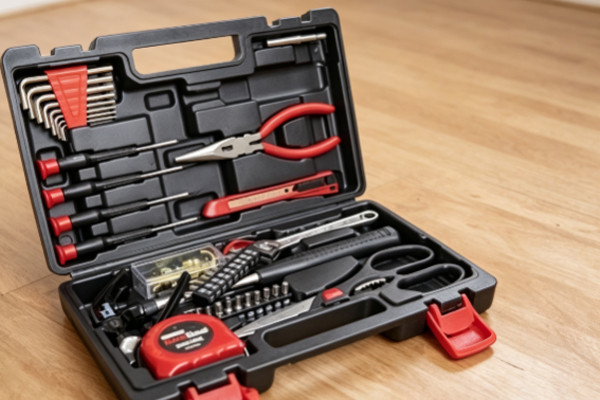
Compact Size Makes Storage and Access More Convenient
One important reason why a mini toolbox is suitable for everyday repairs is that it takes up very little storage space. Household tools are not necessarily used every day. Using a large toolbox for basic tools may require considerable storage space and can make quick access less convenient. A mini toolbox can be placed in a drawer, storage cabinet, garage shelf, workbench, or vehicle compartment and taken out whenever a repair task is required.
The compact box also makes it easier to create a dedicated set of everyday repair tools. Instead of keeping every tool in a large toolbox, users can store frequently used items separately, such as screwdrivers, adjustable wrenches, needle-nose pliers, measuring tapes, and hex keys. This reduces the time spent searching for tools and keeps professional or rarely used equipment separate from everyday essentials.
For apartments, offices, and small workshops with limited storage space, a mini toolbox can be especially practical. Users can select a suitable size based on their available storage area and keep their tools organized without affecting the placement of other items.
Lightweight Design Makes Repair Tools Easier to Carry
Everyday repair work can take place in different locations, including kitchens, bedrooms, balconies, garages, offices, and workshops. If a toolbox is too heavy, moving it from one location to another can create unnecessary inconvenience. Mini toolboxes generally feature compact bodies and convenient handles, allowing users to quickly move their tools from storage areas to repair locations.
A lightweight design is also useful for temporary maintenance tasks. When furniture needs adjustment, a door lock needs tightening, or office equipment requires simple maintenance, users can carry a small toolbox directly to the work area instead of moving a large tool cabinet. For people who frequently perform short-distance maintenance work, this makes the repair process more flexible.
A portable mini toolbox may include the following practical features:
- Lightweight body: Reduces the overall weight when carrying tools.
- Comfortable handle: Makes the toolbox easier to pick up and transport with one hand.
- Compact dimensions: Allows the toolbox to fit into narrow storage areas and vehicle compartments.
- Reliable latches: Helps prevent the lid from opening accidentally during transportation.
- Organized interior: Keeps tools in a relatively stable position while the box is being moved.
These features make everyday repair tools easier to carry, especially for users who frequently move between different working locations.
Organized Storage Can Improve Repair Efficiency
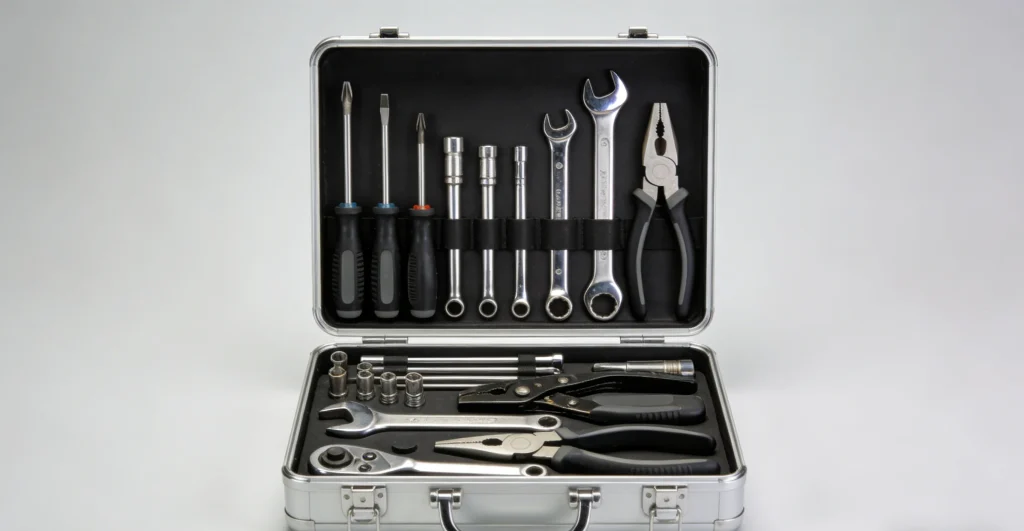
During a repair task, the tools themselves are not the only factor that affects the user experience. Being able to find the required tool quickly is equally important. Mini toolboxes may include dividers, slots, small compartments, or layered storage areas that allow tools to be organized according to their size and purpose. Screwdrivers can be placed in dedicated slots, while small screws and nuts can be stored in separate compartments. Pliers and wrenches can also be arranged according to their dimensions.
Organized storage gives each tool a relatively fixed position. After completing a repair task, users can return each tool to its designated location, making it easier to find the same item during the next repair. For homeowners, this simple storage method helps reduce scattered tools. For maintenance workers, it can also make it easier to check whether frequently used tools are complete.
A mini toolbox can also be configured according to specific repair tasks. For furniture assembly, users may prepare Phillips screwdrivers, hex keys, measuring tapes, and small pliers. For electronic equipment maintenance, precision screwdrivers, tweezers, and small screwdriver bits may be more appropriate. Bicycle maintenance may require hex tools, wrenches, and basic adjustment tools. Preparing tools according to the task can make the toolbox more practical and efficient.
Suitable for Home, Office, and DIY Maintenance
A mini toolbox is not limited to one particular type of repair work. It can be used for many small maintenance tasks encountered in everyday life. Homeowners can use it for furniture assembly, hardware adjustment, door and window maintenance, and basic appliance disassembly or installation. Compared with a large toolbox, a compact storage solution is easier to keep in a fixed location at home and can be accessed whenever needed.
Offices also have many simple maintenance requirements. Computer accessories, printers, desks, office chairs, filing cabinets, and other equipment may require screw tightening or component adjustments after extended use. Keeping commonly used tools in one mini toolbox prevents screwdrivers, pliers, and other equipment from being scattered throughout different areas of the office.
DIY users can also benefit from mini toolboxes. Model making, handicrafts, simple woodworking, electronic projects, and small assembly tasks often involve many compact tools and components. A small storage box can keep these tools together while its compartments can be used for screws, washers, connectors, and other small parts.
Mini toolboxes are also useful for basic vehicle and bicycle maintenance. When only simple tightening, adjustment, or component installation is required, users can take the necessary tools directly to the vehicle or bicycle instead of repeatedly returning to the main tool storage area.
Material and Construction Affect Everyday Use
The material of a mini toolbox has a direct effect on its weight, durability, and suitability for different environments. Plastic toolboxes are lightweight, corrosion-resistant, easy to clean, and flexible in terms of manufacturing and design. As a result, they are well suited to household repairs, office maintenance, and general DIY activities. For users who frequently carry their tools, a lightweight plastic body can reduce the burden associated with transportation.
Metal toolboxes generally provide greater body rigidity and can be suitable for environments where stronger structural support is required. Aluminum toolboxes can provide a useful balance between lightweight construction and structural strength, making them suitable for users who frequently transport their tools. When choosing a product, users can consider tool weight, frequency of use, and the conditions of the storage environment.
In addition to the material, users can pay attention to the toolbox latches, handle, hinges, internal dividers, and bottom structure. People who frequently carry their tools can focus on the durability of the handle and latches. Users who need to store many small components may prefer a toolbox with separate compartments. If the toolbox will be placed in an environment with moisture or dust, protective and sealing features can also be considered.
A mini toolbox is well suited to everyday repairs because it brings commonly used tools together in a lightweight, compact, and portable storage solution. Household repairs, office equipment maintenance, DIY projects, basic vehicle servicing, and bicycle adjustments usually do not require a large collection of tools. A small toolbox can meet these basic storage needs while reducing scattered tools and the time spent searching for them. For toolbox suppliers and sellers, offering mini toolboxes in different materials, capacities, internal configurations, and application-specific designs can help users select products that match their everyday repair habits.