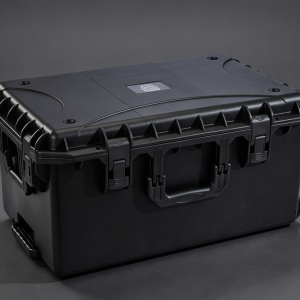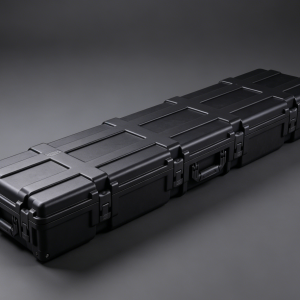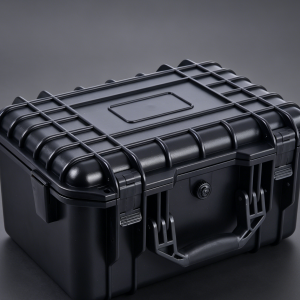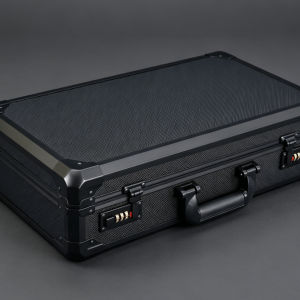
Modern workshop maintenance and production tasks increasingly emphasize efficiency and standardization, and tool management is gradually shifting from simple storage to systematic management. In scenarios such as automotive repair, industrial equipment maintenance, and mechanical processing, technicians need to use multiple types and sizes of tools at the same time. Traditional toolboxes have limitations in capacity, mobility, and categorization, while tool boxes integrate storage, transportation, and on-site use through multi-drawer structures, large-capacity space, and rolling wheels. For high-frequency workshop operations, they significantly improve tool management efficiency and reduce time spent searching for and carrying tools.
Tool Boxes Improve Workshop Tool Management Efficiency
With a wide variety of tools, storage methods directly affect workflow efficiency. Tool boxes provide clearer management through layered design and independent storage spaces.
Categorized Storage Reduces Tool Clutter
Different tools are assigned fixed storage areas, improving the issue of mixed stacking.
- Hand Tool Management: Wrenches, screwdrivers, pliers, and other tools are stored by category for quick access.
- Power Tool Storage: Drills, chargers, batteries, and similar items are stored together to prevent compression and damage.
- Small Parts Organization: Screws, washers, and bits are stored in compartmentalized trays to reduce loss.
Clear categorization allows technicians to locate tools faster and reduce wasted searching time.
Fixed Positions Make Tool Return Easier
Tool management is not only about access efficiency but also about consistent return systems.
- High-Frequency Tools: Commonly used tools are placed in upper drawers or easily accessible positions to improve efficiency.
- Low-Frequency Tools: Spare or specialized tools are stored separately to avoid occupying core space.
Fixed positions help establish a standardized tool management workflow.
Mobile Design Makes Workshop Operations More Flexible
Workshops usually contain multiple workstations, and tools need to move with the workflow. The mobility of tool boxes directly affects efficiency.
Rolling Structure Reduces Manual Carrying
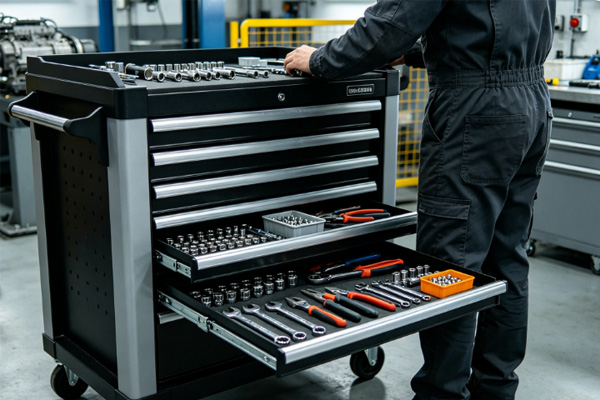
Tool boxes are equipped with wheels and push handles, enabling full mobility. In automotive repair, they can be pushed directly beside the vehicle, carrying wrenches, sockets, and diagnostic tools together, avoiding repeated trips. After maintenance, they can be returned to storage areas for centralized management.
Reduces Physical Workload
Using a tool cart significantly decreases the need for manual lifting and carrying in busy workshops.
- Effortless Movement: Wheels bear most of the weight, reducing physical strain.
- Fewer Trips: Tools move with the workstation, reducing back-and-forth carrying.
The mobile design optimizes the overall working experience.
Large-Capacity Structure Meets Storage Demands
As the variety of tools increases, storage requirements continue to grow.
Multi-Drawer Design Improves Space Utilization
Tool boxes achieve efficient storage through vertical layering.
- Clear Functional Zoning: Storage is organized by tool type or usage frequency.
- Heavy Tools Stored Separately: Metal tools such as sockets and wrenches are independently stored.
- Flexible Layout Adjustment: Drawer usage can be reconfigured based on work needs.
Space utilization becomes more compact and organized, improving both storage and access efficiency.
Stable Structure for High-Frequency Use
Reinforced structures improve load-bearing capacity, making them suitable for long-term storage of heavy tools. Drawers withstand frequent opening and closing, while surface protection reduces wear. The overall frame is strengthened to remain stable without deformation under heavy loads. It also offers anti-rust and corrosion resistance, extending service life in humid or oily environments.
Tool Boxes Promote Standardized Workshop Management
They are not only storage tools but also an essential part of the management system.
Reduces Tool Loss and Duplicate Purchases
Standardized tool management further improves workshop efficiency:
- Clear Positioning: Each tool has a fixed storage location for easy inspection.
- Clear Status: Missing tools are easier to identify.
- Lower Costs: Reduces duplicate purchases caused by loss.
Standardized management helps control costs and extend tool lifespan.
Enhances Overall Workshop Image
Uniform tool boxes make workshops cleaner and more organized. Standardized categorization and return systems improve workspace clarity and reduce clutter. They also simplify inventory checks and maintenance management, lowering daily inspection costs. Long-term use improves team coordination and workflow efficiency.
In modern workshops where tool quantities continue to grow and work pace keeps accelerating, tool boxes have become an essential basic configuration. They integrate storage, categorization, mobility, and usage into one system, making tool management more efficient and organized. Compared with traditional toolboxes, they are better suited for professional environments with diverse tools, high usage frequency, and frequently changing workstations. SIPHIA BOX focuses on professional tool storage solutions, providing more efficient and standardized tool management for modern workshops through large-capacity structures and well-designed compartmentalization.