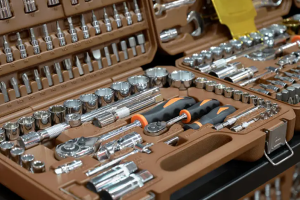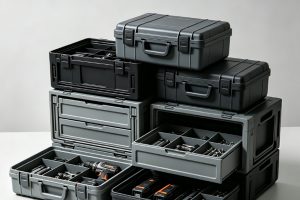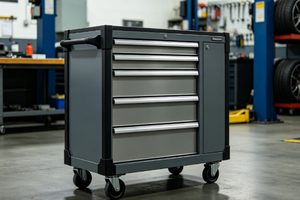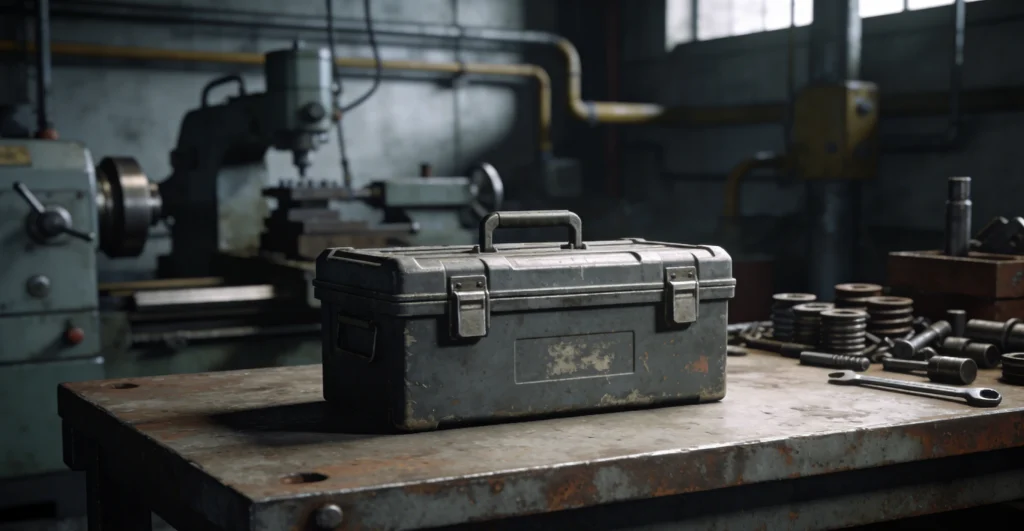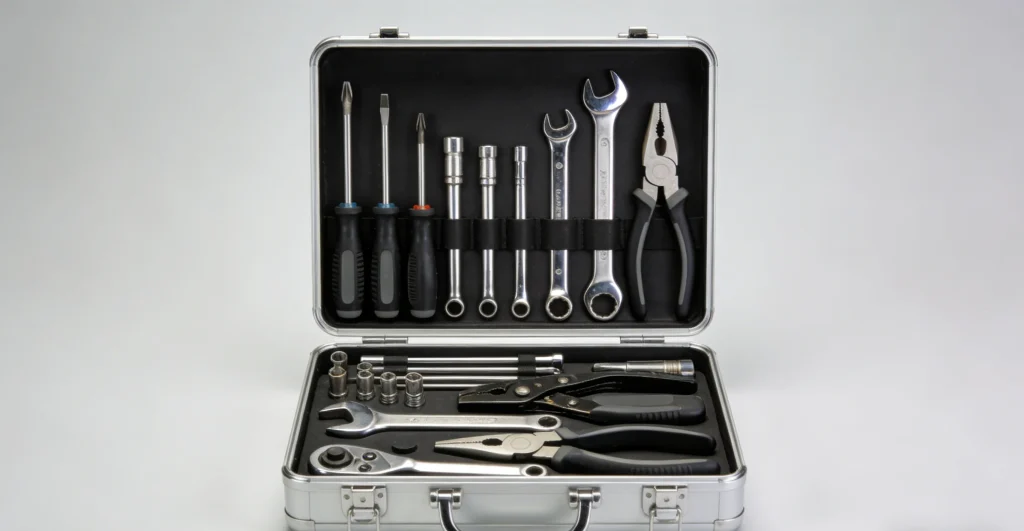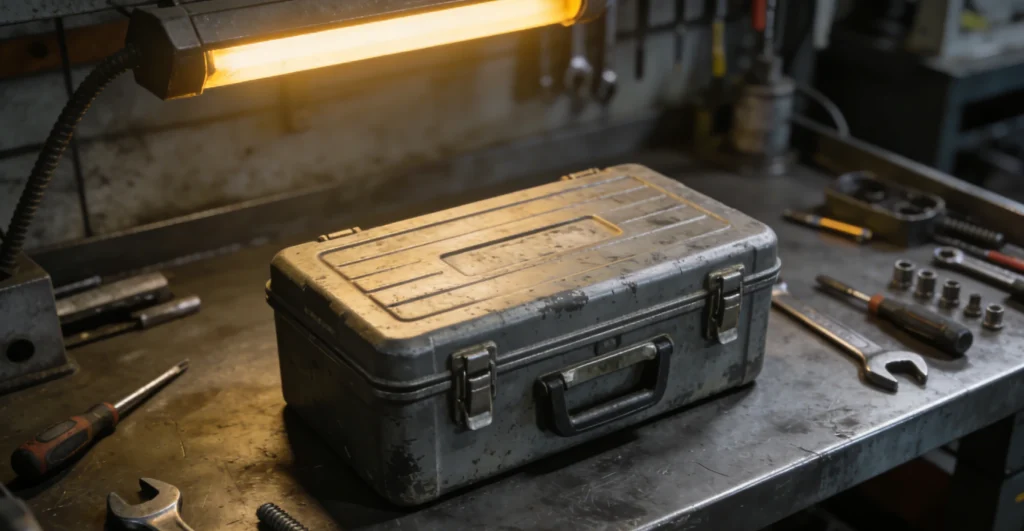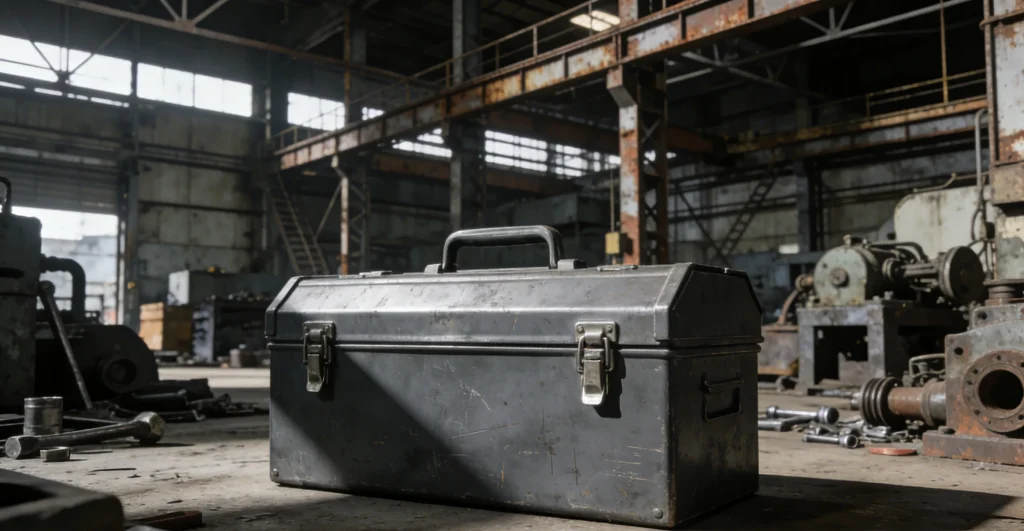
As the number of tools increases, the storage method directly affects work efficiency. Standard toolboxes are suitable for household repairs, simple installations, and everyday carrying. Their structures are usually relatively fixed, with limited capacity and compartmentalization. Modular toolboxes, on the other hand, feature a combinable and expandable design that allows the internal layout to be adjusted according to tool types, work tasks, and usage scenarios. For automotive repair, industrial maintenance, engineering installation, and professional technicians, understanding the differences between the two can help users choose a tool storage solution that is more suitable for long-term use while making tool management clearer and more efficient.
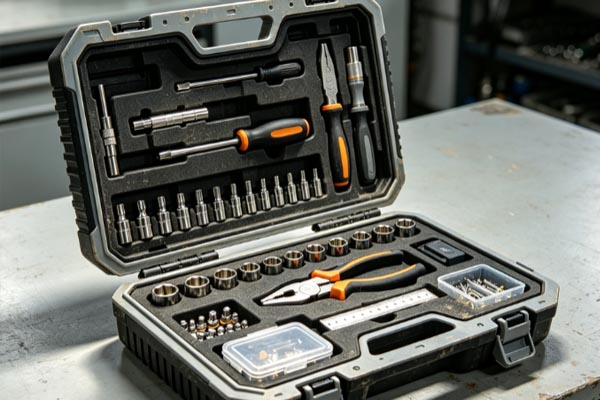
Significant Differences in Structural Design and Storage Methods
Modular toolboxes and standard toolboxes may look similar in appearance, but their internal structures and usage logic can differ considerably. The following sections explain the differences from the perspectives of storage structure and management methods.
Standard Toolboxes Mainly Use Fixed Storage Spaces
Standard toolboxes primarily rely on fixed compartments and are suitable for scenarios involving fewer tools and simpler requirements.
- Fixed compartments: They usually include a tray or a small number of compartments for common tools such as screwdrivers, pliers, and wrenches. When the number of tools increases, they can easily become mixed together.
- Simple storage: Tools are generally arranged according to personal habits, without standardized sections. When small accessories, measuring tools, and power tools are stored together, access becomes inconvenient.
- Suitable for light repairs: They are suitable for household repairs, simple assembly, and temporary work.
Standard toolboxes have a simple structure and are suitable for basic repairs.
Modular Toolboxes Emphasize Flexible Combination
Modular toolboxes improve storage flexibility through independent modules and adjustable structures. Sockets, precision tools, testing equipment, and small accessories can be stored in separate sections, while the module configuration can also be adjusted according to the repair project. Users can classify tools by size, function, and frequency of use, reducing the likelihood of mixing them together. Teams can also standardize tool storage, return, and inspection procedures, reducing the risk of missing tools and duplicate purchases. Modular toolboxes are suitable for professional environments with a wide variety of tools, frequent use, and a need for standardized management.
Differences in Tool Capacity and Expandability
The capacity of a toolbox affects not only the current user experience but also its ability to accommodate additional tools in the future. Standard toolboxes are more suitable for a fixed number of basic tools, while modular toolboxes offer greater advantages in terms of expansion.
Standard Toolboxes Have Relatively Limited Capacity
Standard toolboxes focus on being lightweight and easy to carry, but their capacity and expandability are limited.
- Suitable for carrying basic tools: Their compact size makes them convenient for storing common tools such as screwdrivers, wrenches, and pliers.
- Easily become crowded when there are many tools: Internal space is limited, so tools can become disorganized, and multiple toolboxes may be required.
- Limited expandability: Storage space usually cannot be increased. When the number of tools grows, users may need to replace the toolbox.
Standard toolboxes are suitable for users with a small and stable number of tools.
Modular Toolboxes Are Suitable for Professional Work Environments
Modular toolboxes can adjust storage space according to work requirements.
- Multi-level combination: Drawers, trays, side panels, and storage boxes can be used to classify and store tools.
- Flexible expansion: When the number of tools increases, new storage modules can be added without replacing the entire toolbox system.
- Adaptable to different scales: Users can select the appropriate number of levels and capacity according to the number of tools they have.
Modular toolboxes offer flexible capacity and are suitable for professional users whose tool collections continue to grow.
Differences in Mobility and On-Site Work Experience
Toolboxes not only provide storage but also affect the efficiency of movement on site. Different mobility methods influence tool allocation, work continuity, and physical exertion.
Standard Toolboxes Are Convenient to Carry by Hand
Standard toolboxes are generally lightweight and compact, making them suitable for short-distance carrying and temporary use.
- Suitable for short-distance movement: They can be carried directly to a vehicle, piece of equipment, or household repair location.
- Carrying many tools can be tiring: Once filled with tools, the toolbox becomes heavier, and carrying it over long distances can easily cause fatigue.
- Inconvenient for multi-station work: When workers frequently change positions, carrying a toolbox by hand can reduce efficiency.
Standard toolboxes are suitable for short-distance, low-frequency work involving a limited number of tools.
Modular Toolboxes Are Suitable for Continuous Work
Modular toolboxes are typically equipped with wheels, multi-level structures, and compartmentalized designs, making them suitable for long-term and frequent use. Workers can push them to the work area, reducing the burden of carrying tools. Different modules can be used to store different types of tools, making them easier to locate and return. Modular toolboxes are suitable for multi-station operations such as automotive repair, equipment installation, and industrial maintenance.
Differences in Target Users and Purchasing Value
When selecting a toolbox, users should consider the frequency of use, number of tools, budget, and working environment. Different users have different requirements for capacity, mobility, and expandability.
Standard Toolboxes Are Suitable for Basic Users
Standard toolboxes have a lower purchase cost and are suitable for users with fewer tools and a lower frequency of use.
- Household users: They can be used to store common tools for furniture assembly, appliance repairs, and similar tasks.
- Temporary repair workers: They are suitable for short-term projects and are relatively convenient to carry and organize.
- Users with limited budgets: Their simple structure results in a lower initial purchase cost.
Standard toolboxes are suitable for household users, temporary repair workers, and scenarios with limited tool requirements.
Modular Toolboxes Are Suitable for Professional Teams
Modular toolboxes are suitable for teams with many tools, frequent use, and a need for unified management.
- Automotive repair and mechanical maintenance: They make it convenient to classify and quickly access various tools.
- Engineering construction and electromechanical installation: Their wheels and multi-level storage make on-site movement and tool allocation easier.
- Bulk corporate purchasing: Standardized configurations can be provided for different positions, facilitating standardized management.
Modular toolboxes are suitable for professional technicians, maintenance teams, and companies that need to manage tools over the long term.
The core differences between modular toolboxes and standard toolboxes are mainly reflected in structural flexibility, capacity expandability, mobility, and applicable scenarios. Standard toolboxes are suitable for lightweight, low-frequency basic repairs, while modular toolboxes are better suited to professional environments with many tools, frequent operations, and the need for teamwork. SIPHIA BOX provides tool storage solutions for different work scenarios. Through modular combinations, compartmentalized designs, and convenient mobility, we help businesses and professional users improve tool management efficiency. Visit our website to learn more about the toolbox products that best suit your needs.