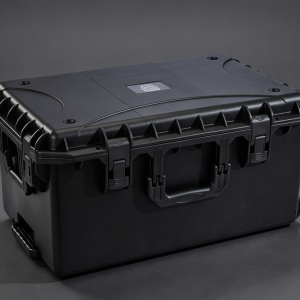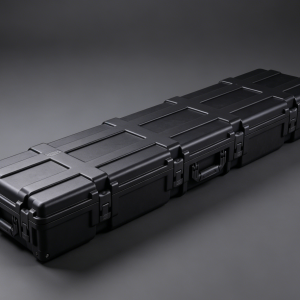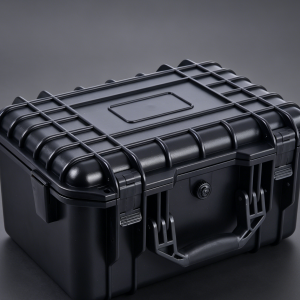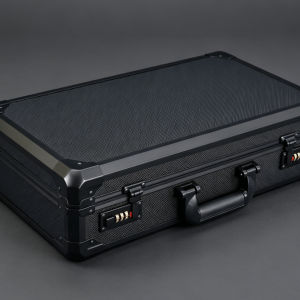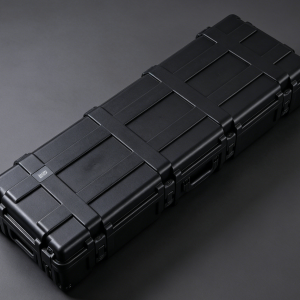
Large aluminum tool boxes are mainly used for trucks, engineering vehicles, industrial equipment, outdoor operations, and scenarios where a large number of tools and parts need to be stored together. Compared with ordinary small tool boxes, large tool boxes provide more interior space and can accommodate wrenches, sockets, jacks, maintenance equipment, spare parts, and other relatively large items. At the same time, aluminum itself has a low density, allowing the box to maintain a certain level of structural strength while controlling its own weight. During long-term vehicle transportation, if the tool box itself is too heavy, it will increase the vehicle load, while an aluminum box body can reduce this burden while providing storage capacity.
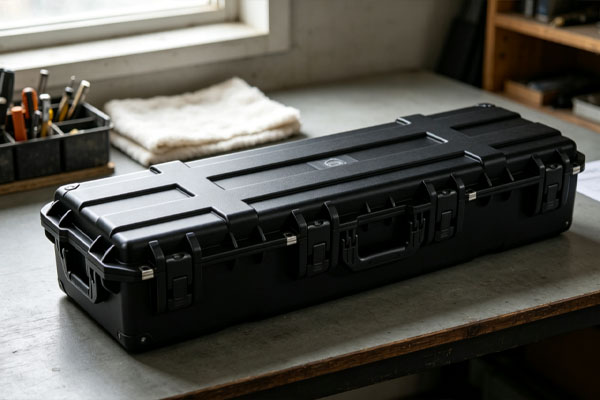
In addition, aluminum alloy has good corrosion resistance and is suitable for vehicles that are exposed to rain, dust, dirt, and humid environments for long periods. Large tool boxes can also be designed with reinforcing ribs, bent structures, double doors, layered partitions, and different types of locks according to actual requirements, allowing the interior space to be used more efficiently. However, a large tool box is not necessarily better simply because it is larger. As the box size increases, the requirements for material thickness, reinforcement structures, hinges, locks, and mounting brackets also become higher. Therefore, when selecting a large aluminum tool box, the appropriate size and structure should be determined according to the stored items, available vehicle space, load requirements, and operating environment.
What Are the Characteristics of Large Aluminum Tool Boxes?
More Sufficient Storage Space
The most obvious characteristic of a large tool box is its relatively large interior capacity. Since engineering and maintenance personnel use many different types of tools in their daily work, small tool boxes can often only accommodate basic tools such as commonly used wrenches and screwdrivers, while large aluminum tool boxes can store maintenance tools, spare parts, and auxiliary equipment at the same time. After the interior space is properly designed, partitions or drawers can also be installed so that different tools can be stored separately and tool accumulation can be reduced.
Suitable for Fixed Installation
Large aluminum tool boxes are generally not designed simply for hand carrying, but are installed on truck frames, trailers, engineering vehicles, or industrial equipment. Therefore, the product design takes fixed brackets, mounting holes, and the load-bearing structure of the box body into consideration. After being securely installed, the tool box can reduce movement and shaking during vehicle operation.
Why Is Aluminum Alloy Suitable for Making Large Tool Boxes?
Relatively Light Weight
The larger the tool box, the more material is required. If it is made from a metal with a higher density, the weight of the box itself may increase significantly. Aluminum alloy has a relatively low density, giving it a good weight advantage in large box applications. A tool box mounted on a truck needs to store tools while also taking the vehicle’s overall load capacity into consideration. A lighter box can reduce additional load and also make installation and maintenance more convenient.
Good Corrosion Resistance
Large tool boxes are often installed outside vehicles, where they need to withstand rain, dirt, and moisture in the air. If the surface protection of ordinary steel sheets is damaged, rust may occur. Aluminum alloy can form an oxide protective layer in the air and has good corrosion resistance, making it suitable for outdoor tool box applications. Of course, aluminum alloy is not completely immune to corrosion. In coastal areas with strong salt spray or special industrial environments, appropriate materials and surface treatment processes are still required.
Advantages of large aluminum tool boxes:
Large capacity: Suitable for centrally storing large quantities of tools, parts, and maintenance equipment.
Light weight: Reduces the weight of the box while maintaining structural stability.
Good corrosion resistance: Suitable for long-term use on vehicles and in outdoor environments.
Flexible structural customization: The dimensions, doors, and interior layout can be adjusted according to the installation space.
How Can Large Tool Boxes Maintain Stability?
Reinforcing Ribs Improve Box Rigidity
Large boxes have relatively large aluminum sheet areas. If only flat thin sheets are used, they are more likely to deform when subjected to pressure. Therefore, manufacturers generally add reinforcing ribs or use bent structures according to the dimensions of the box. Reinforcement structures can improve the rigidity of the box body and help keep large sheet-metal surfaces more stable.
Select Suitable Hinges and Locks
Large tool boxes usually have relatively large doors, so the weight of the door itself also increases. If the hinges are too small or installed improperly, problems such as door sagging and difficulty closing may occur after long-term use. Locks also need to provide sufficient securing force. For larger tool boxes, multiple locks can be used according to the design to distribute the load on the door more evenly.
Sealing Structure
If a large aluminum tool box is used outdoors, it generally needs to be equipped with sealing strips. Sealing strips are installed where the door contacts the box body and can reduce the entry of rainwater and dust. However, sealing performance depends not only on the sealing strip but also on the flatness of the door, hinge position, and locking pressure. Therefore, the overall structure of a large tool box needs to ensure that the door can close evenly.
Frequently Asked Questions
Q1: Do large aluminum tool boxes have strong load-bearing capacity?
Answer: Load-bearing capacity mainly depends on the aluminum sheet thickness, box structure, reinforcing ribs, and installation method. If a large tool box needs to store heavy-duty tools, an appropriate aluminum sheet thickness should be selected and necessary reinforcement structures should be added.
Q2: Will a large tool box be very heavy?
Answer: The larger the box, the more material is required, so its own weight will naturally increase. However, aluminum alloy has a relatively low density, making it generally easier to control the weight compared with a steel box of the same specifications.
Q3: Are large aluminum tool boxes suitable for installation on trucks?
Answer: Yes. Tool boxes can be installed on the side, bottom, or frame of a truck according to the available space, but the installation dimensions, bracket positions, ground clearance, and vehicle load should be confirmed in advance.
Q4: Do large aluminum tool boxes need waterproof treatment?
Answer: If the tool box is installed outdoors for a long period, it is recommended to use suitable sealing strips and inspect the welds, door, and lock areas. It should be noted that waterproof performance depends on the overall structure; aluminum alloy itself does not mean that the tool box is completely waterproof.
The main advantages of large aluminum tool boxes are that they can achieve a good balance between capacity, weight, protection, and installation flexibility. They provide substantial storage space and are suitable for centrally storing tools in trucks, engineering vehicles, and industrial equipment. Aluminum alloy is relatively lightweight, which can prevent large boxes from adding excessive vehicle load due to the weight of the material itself. At the same time, aluminum alloy has good corrosion resistance and is suitable for long-term outdoor use. However, as the size of the tool box increases, structural design becomes increasingly important. The box needs to have properly designed reinforcing ribs, the door needs to be matched with suitable hinges and locks, and the bottom needs to account for the long-term pressure caused by the weight of the tools. For tool boxes used on trucks, it is also necessary to confirm whether the mounting brackets can withstand the combined weight of the box and its contents. If better protection is required, sealing strips and an appropriate door structure can be added to reduce the entry of rainwater and dust. Inside the box, partitions, foam, or storage containers can be used for classification so that the large storage space does not become a disorganized pile of tools.
A large aluminum tool box is not simply an ordinary tool box made larger. Its structure needs to be redesigned according to storage capacity, load-bearing requirements, available vehicle installation space, and operating environment. When selecting one, the weight, dimensions, and frequency of use of the items to be stored should be clearly determined before deciding on the aluminum sheet specifications, box dimensions, and reinforcement method. For trucks and engineering vehicles that need to carry large quantities of maintenance tools for long periods, a properly designed large aluminum tool box can provide stable storage space while taking weight control and outdoor operating requirements into consideration. It is a practical option for centrally managing large tools and spare parts.