A high-quality rolling tool box is not simply a product with several drawers and casters. More importantly, it must achieve a stable balance between load-bearing capacity, safety, mobility, storage, and durability. For automotive repair, industrial maintenance, equipment servicing, and professional workshops, a well-designed rolling tool box can reduce the time spent searching for tools, improve workplace organization, and lower maintenance costs over long-term use. Understanding the core design standards can help businesses and professional users choose products that are better suited to their actual working conditions.
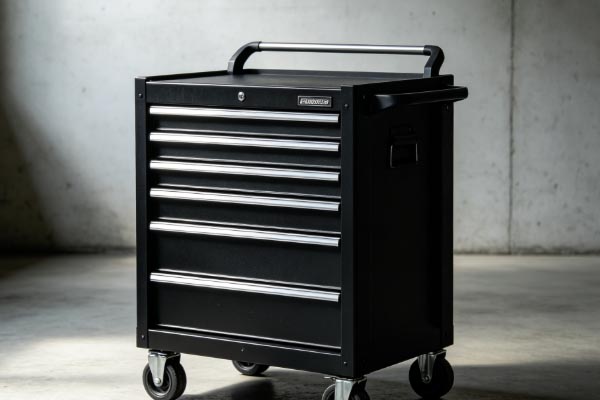
The Box Structure Should Meet the Requirements of Heavy-Duty Use
Rolling tool boxes are constantly exposed to the weight of tools, frequent drawer opening and closing, and collisions in workshop environments. The box structure directly affects its service life and safety.
Materials and Panels Should Provide Stable Load-Bearing Capacity
High-quality products are typically made of materials such as cold-rolled steel, stainless steel, or aluminum alloy, with panel thickness selected according to the intended application. The following aspects should be considered during the design process:
- Whether the box uses reinforcement plates or internal support ribs.
- Whether the bottom structure can support the weight of fully loaded tools.
- Whether the drawer mounting areas provide sufficient support.
- Whether the welding points are even, secure, and free from obvious defects.
- Whether the box is prone to shaking or deformation when fully loaded.
Automotive repair and industrial maintenance environments typically require storage for sockets, wrenches, impact tools, and testing equipment. Steel structures are more suitable for high-frequency, heavy-duty work.
Surface Treatment Should Combine Rust Protection and Wear Resistance
Workshop environments may contain oil, metal dust, moisture, and cleaning agents. Surface coatings therefore need to provide good adhesion and corrosion resistance. High-quality rolling tool boxes commonly use powder coating, baked paint, or other protective processes, while also paying attention to coverage around edges and corners. A smooth, easy-to-clean surface not only improves appearance but also facilitates daily maintenance.
The Drawer and Storage System Should Improve Access Efficiency
The value of a rolling tool box lies not only in its capacity but also in whether tools can be clearly categorized, accessed smoothly, and stored efficiently.
Drawer Slides Need to Be Stable and Smooth
Once drawers are loaded with tools, their weight increases significantly. The quality of the drawer slides directly affects opening and closing performance as well as operational safety. Design standards may include the following aspects:
- The slides have a clearly defined load rating.
- The drawers remain smooth during full-load operation without sticking.
- The drawers do not sag or shift noticeably after closing.
- The slides include stop mechanisms to prevent accidental drawer removal.
- The slides maintain good operating stability after frequent use.
For professional repair technicians, drawer opening speed and reliability can affect the entire workflow.
The Internal Layout Should Support Tool Classification
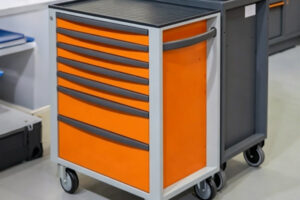
High-quality rolling tool boxes typically feature drawers of different heights for separating hand tools, measuring instruments, power tools, and small accessories. A practical layout may include:
- Shallow drawers for screwdrivers, pliers, and measuring tools.
- Medium-height drawers for wrenches, sockets, and repair accessories.
- Deep storage areas for power tools or larger equipment.
- Dividers, foam inserts, or modular storage spaces inside the drawers.
- A worktop area for temporarily placing frequently used tools.
A clear zoning system reduces searching and makes tool organization more consistent.
Mobility and Safety Features Need to Be Developed Together
Rolling tool boxes are often moved between different workstations. The design of the casters, handles, and locking systems affects operational safety and the overall user experience.
The Casters Should Support Movement Under Full Load
Caster selection should not be based on size alone. Load capacity, material, maneuverability, and floor conditions must also be considered. A more mature design typically includes:
- A combination of two fixed casters and two swivel casters.
- Swivel casters with flexible directional movement.
- Braking mechanisms that can securely lock the box in place.
- Caster surfaces with wear-resistant and oil-resistant properties.
- Good resistance to tipping or loss of balance during fully loaded movement.
When workshop floors contain gaps, slopes, or metal debris, caster maneuverability and impact resistance are especially important.
Locks and Anti-Tip Structures Should Ensure Operational Safety
Tool boxes often store large quantities of high-value tools. A central locking system can reduce the risk of accidental opening and loss. Interlocking drawer locks, individual drawer stops, and anti-tip mechanisms can also reduce center-of-gravity shifts caused by opening multiple drawers at the same time. The handle height should comply with ergonomic principles, allowing users to push the box naturally and avoiding additional strain during prolonged operation.
High-Quality Design Should Also Focus on Details and Application Scenarios
A rolling tool box truly suited to professional environments should be designed around daily operation, maintenance convenience, and long-term expansion needs rather than focusing only on appearance or initial price.
The Worktop and Corner Design Should Support Practical Work
A wear-resistant worktop can temporarily hold parts, testing instruments, or disassembled components. Properly designed raised edges can help prevent items from sliding off. Rounded corners, impact-resistant corner guards, and edges without obvious burrs can reduce collision-related injuries while also making cleaning and movement more convenient.
Specifications Should Match Different Workloads
Different applications have different requirements for rolling tool boxes. When making a purchase, the following factors should be considered:
- Application scenario: Home repairs may require lightweight, compact products, while automotive repair, machining, and equipment maintenance require products with high load capacity, large storage capacity, and stable structures.
- Number of tools: A small-capacity product may be sufficient for a limited number of tools, while users with many tools should choose a large-capacity design with multiple drawers.
- Frequency of use: For frequent use, pay attention to slide smoothness, structural durability, and operating convenience.
- Mobility requirements: If the box needs to be moved frequently, consider caster quality, handle design, and overall weight.
- Floor conditions: Uneven floors are better suited to larger, more stable casters.
- Budget: After meeting requirements for load capacity, storage capacity, and durability, choose a suitable product according to your budget.
By considering the application scenario, number of tools, mobility requirements, and budget together, you can select a rolling tool box that better suits your needs.
In professional repair and industrial work environments, efficient tool management can significantly improve productivity and workplace organization. SIPHIA BOX focuses on professional tool storage solutions. Through well-planned drawer layouts, stable box structures, and reliable mobility systems, it helps repair teams improve tool management efficiency. Choosing a rolling tool box that meets established design standards can not only improve workplace organization but also make every tool retrieval, movement, and return more efficient and reliable.