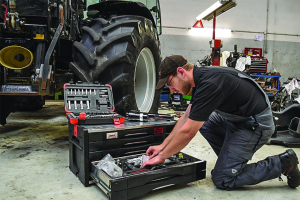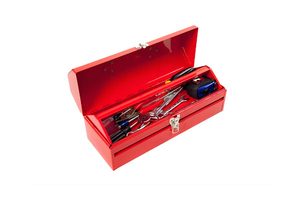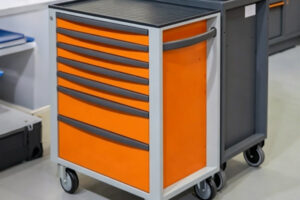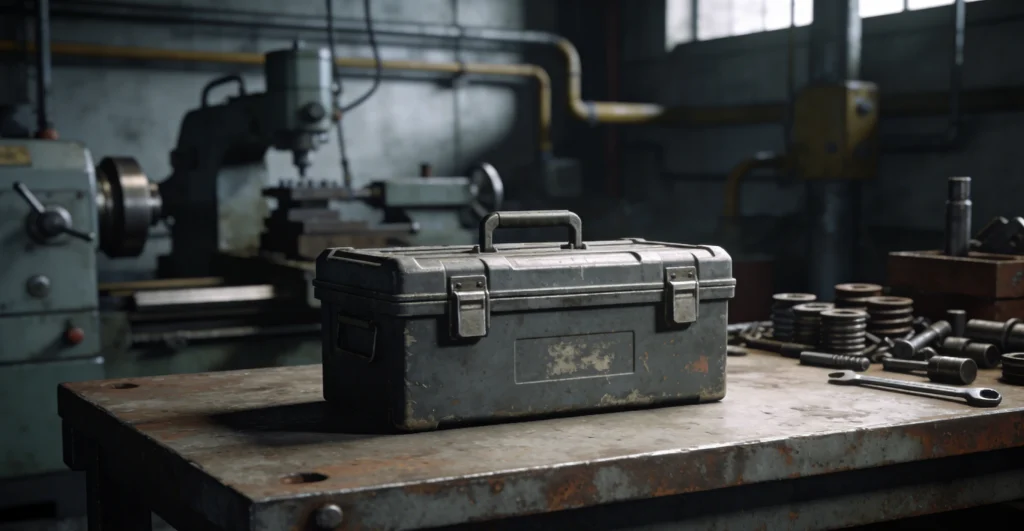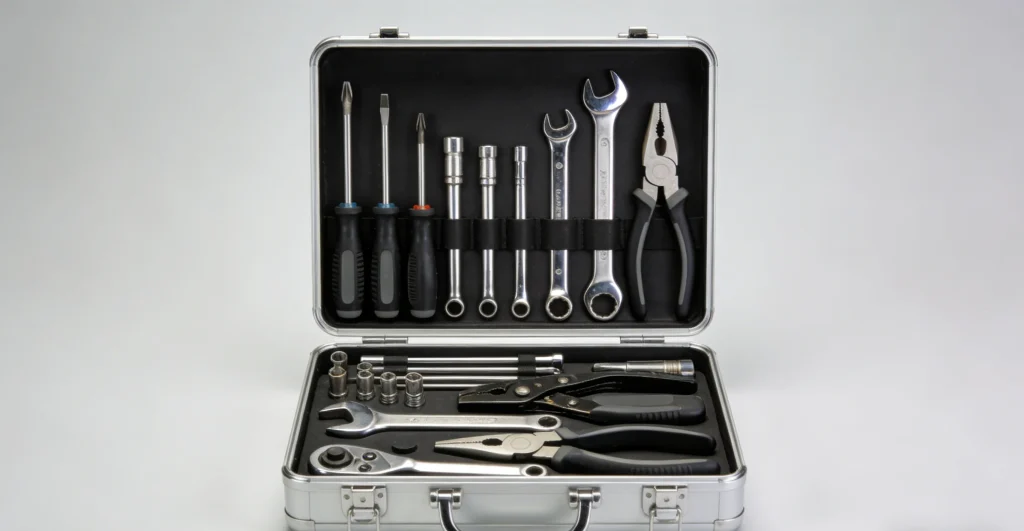
With its large storage capacity and flexible mobility, the rolling tool box is widely used in automotive repair, industrial maintenance, machining, and construction. Many users focus on capacity, appearance, and price when making a purchase, but often overlook details such as size compatibility, load-bearing structure, caster quality, and drawer layout. After a tool box is put into frequent use, these design factors directly affect mobility, tool management efficiency, and long-term operating costs.
Size and Capacity Are Easily Overlooked
A rolling tool box is not necessarily more practical simply because it has a larger capacity. Its dimensions need to match the number of tools and the available workspace.
Looking Only at External Dimensions
Some users focus only on the overall length, width, and height, while overlooking the actual usable internal space.
- Internal dimensions affect storage: The thickness of the box walls, drawer structure, and dividers all occupy space, so internal dimensions should be considered when evaluating capacity.
- Tool dimensions should be measured in advance: Drills, testing equipment, and long-handled tools require sufficient internal space to avoid finding that they cannot fit after purchase.
- Reserve space for future expansion: The number of tools may continue to increase, so reserving additional capacity can reduce the frequency of future replacements.
Planning tool storage requirements in advance can make a rolling tool box more efficient and convenient in actual use.
Ignoring the Size of the Work Area
A large-capacity tool box can store more equipment, but it also occupies more workshop space.
- The service station needs an appropriate distance: The tool box should be able to stay close to vehicles, equipment, or workbenches while leaving enough room for normal operation.
- Storage areas need to be considered: When purchasing multiple units, the space required for aisles, shelves, and storage areas must also be calculated.
Only by matching the dimensions appropriately can the capacity advantage be fully utilized.
Casters and Load-Bearing Structures Are Easily Underestimated
The casters determine the mobility of the tool box, while its load-bearing capacity affects long-term stability.
Focusing Only on the Number of Casters
The number of casters does not fully represent mobility performance. Caster material, frame structure, and brake design are equally important. The casters need to remain stable, as the weight increases significantly when the tool box is fully loaded and the casters must withstand continuous loads. Steering capability affects the user experience. Repair workshops often have narrow aisles, and flexible steering makes it easier to reach different workstations. Brake structures improve parking stability, and reliable braking can reduce accidental movement during repair work.
Ignoring Overall Load-Bearing Capacity
The overall weight of a tool box increases significantly after it is filled with a large number of metal tools.
- Drawer load capacity requires separate attention: Deep drawers are usually used for heavier tools, and slide strength affects opening and closing stability.
- The box frame needs to be sufficiently sturdy: Long-term heavy-load use can test structural strength, while a solid frame helps reduce deformation.
Load-bearing capacity should be evaluated based on both the specifications of the entire tool box and those of individual drawers.
Internal Layout and Safety Design Should Not Be Judged by Appearance Alone
After being put into use, the drawer layout, tool classification, and locking structure will continuously affect work efficiency.
More Drawers Do Not Necessarily Mean Better Performance
An increase in the number of drawers does not necessarily improve space utilization.
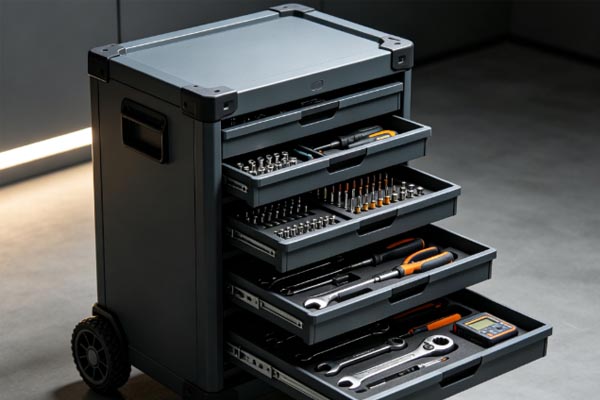
- Arrange drawer depth according to tool type: Shallow drawers are suitable for screwdrivers, sockets, and small accessories, while deep drawers are suitable for power tools and large equipment.
- Frequently used tools should be placed in accessible positions: Storing commonly used tools where they are easy to open and reach can reduce search time.
- Small parts need separate compartments: Screws, washers, and bits are suitable for classification using dividers or storage boxes.
A well-planned layout can improve tool access and management efficiency.
Ignoring Locking and Protective Structures
If drawers open accidentally during movement, tools may scatter or equipment may be damaged. During transportation or movement, locking structures can reduce the risk of drawers sliding open. Repair environments often involve oil, dust, and friction, so the surface treatment needs to provide appropriate durability. Corners and box connection areas are prone to impact, and reinforced protection can help extend the service life.
Long-Term Use Requirements Should Also Be Considered
A rolling tool box is generally a long-term-use piece of equipment, so purchasing decisions should not be based solely on the initial price.
Comparing Only Prices Can Lead to Quality Being Overlooked
Although low-priced products can reduce the initial investment, structural design and component quality also need to be considered.
- Slide quality affects service life: Frequent opening and closing causes continuous wear, while smooth and stable slides can improve the user experience.
- Hardware determines detailed stability: Handles, locks, hinges, and connectors all need to withstand long-term operation.
- Material affects overall durability: Metal materials such as cold-rolled steel are suitable for industrial tool boxes and can be used in applications such as mechanical repair and equipment maintenance.
When making a purchase, the product’s structural design, material quality, and long-term operating costs should be compared comprehensively rather than making a decision based solely on price.
Ignoring Future Expansion Needs
The number of tools and work tasks may continue to change, so the tool box should also have a certain level of adaptability.
- Modular structures make adjustments easier: Different tools can be reorganized according to storage requirements.
- Businesses need to consider standardized management: Using similar tool configurations and classification standards across multiple repair stations helps with inventory checks and handovers.
- Customization requirements can be discussed in advance: For special dimensions, internal layouts, or bulk purchasing requirements, confirming details in advance can reduce subsequent adjustment costs.
Planning usage requirements in advance when selecting a rolling tool box can make tool storage more efficient and provide greater convenience for future work expansion.
When purchasing a rolling tool box, the actual working environment and tool configuration should serve as important references. Automotive repair, industrial maintenance, machining, and construction applications have different requirements for mobility stability, storage efficiency, and structural durability. SIPHIA BOX offers products such as rolling tool boxes and stackable tool boxes to help users plan tool storage and management according to their work requirements.