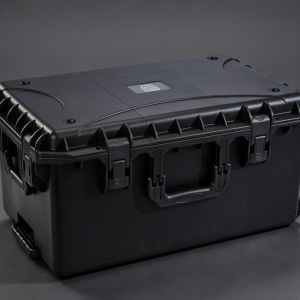
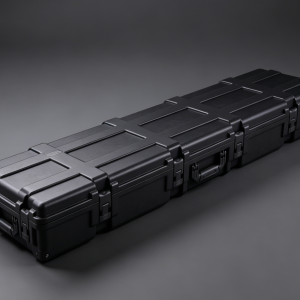
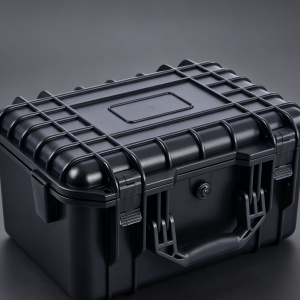
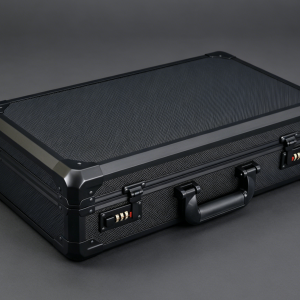
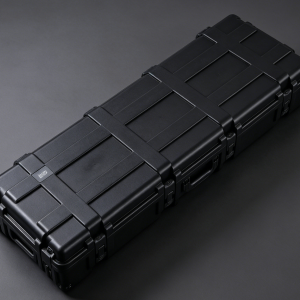
For professionals working in factory maintenance, machinery repair, equipment servicing, automotive repair, and engineering projects, bigger does not always mean better when choosing an industrial toolbox. A toolbox that is too small can make tools difficult to organize and access, while an oversized toolbox may add unnecessary weight and take up valuable workspace. The right toolbox size should be determined by the number and dimensions of the tools, the working environment, and how the toolbox will be transported.
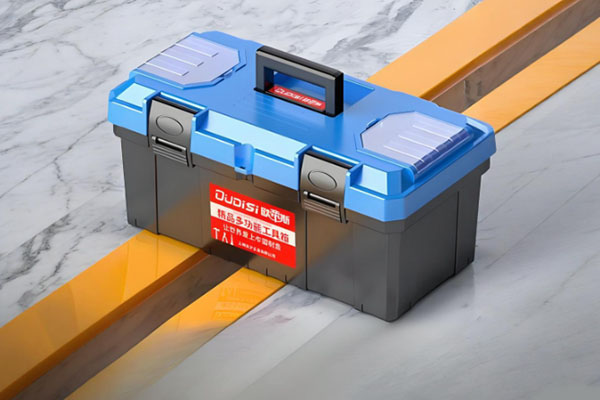
Why Does Industrial Toolbox Size Matter?
It Affects Tool Organization Efficiency
Professional users often need to carry wrenches, screwdrivers, pliers, sockets, measuring tools, and power tool accessories at the same time. When the internal space is insufficient, tools can become mixed together, making them harder to find and increasing the risk of tools hitting or damaging one another.
Choosing an industrial toolbox with the right dimensions allows frequently used tools to have dedicated storage areas. A well-organized interior makes tools easier to access and helps reduce the time spent searching for equipment during maintenance work.
It Affects Transportation and Mobility
An industrial toolbox is not only used for storage but also for transporting tools between different work areas. For a toolbox that remains near a fixed workshop or workbench, a larger capacity may be more practical. For maintenance technicians who frequently move between workstations, warehouses, and job sites, overall weight and external dimensions become more important.
Different types of toolboxes are designed for different applications. Compact toolboxes generally prioritize portability, medium-sized models balance storage capacity and mobility, while large toolboxes are better suited to professionals who need to organize a large number of tools and accessories.
How Should Professionals Determine the Right Toolbox Size?
Measure the Longest Tool First
Before purchasing an industrial toolbox, gather the tools you intend to store and measure the longest, widest, and tallest items.
Long-handled wrenches, socket sets, power tools, and measuring instruments deserve particular attention. A tool fitting inside the toolbox does not necessarily mean the toolbox is an appropriate size. Sufficient clearance should also be left for convenient removal and replacement.
Determine Capacity Based on the Number of Tools
If the toolbox is mainly used for a small collection of screwdrivers, pliers, wrenches, and other hand tools, a compact toolbox may be sufficient.
For users who need to store hand tools, maintenance accessories, and small power tools together, a medium-sized industrial toolbox can provide a better balance between capacity and portability. Factory maintenance teams, automotive technicians, and equipment engineers who carry a large number of tools may benefit from a high-capacity toolbox or a rolling toolbox.
Do Not Look Only at External Dimensions
When selecting a toolbox, both external and internal dimensions should be checked. External dimensions determine whether the toolbox can fit inside a vehicle, on a storage rack, or under a workbench. Internal dimensions determine whether the tools can actually be stored properly.
Wall thickness, reinforcement structures, trays, dividers, and protective foam can all reduce the usable internal space. Therefore, two toolboxes with similar external dimensions may have significantly different usable capacities.
What Toolbox Size Is Suitable for Different Industrial Applications?
Factory Equipment Maintenance
Factory maintenance technicians usually work with different types and sizes of hand tools and equipment accessories. For a fixed maintenance station, a large-capacity toolbox with multiple trays or drawers can provide better organization and make it easier to separate different categories of tools.
Machinery Repair and Engineering Maintenance
Machinery repair and engineering maintenance often involve wrenches, measuring instruments, screwdrivers, and various accessories. If tools need to be moved between different workstations frequently, a medium-capacity toolbox equipped with a carrying handle or wheels can offer a practical solution.
Automotive Repair
Automotive repair involves a wide range of tools, and some of them can be relatively heavy. Professional repair workshops may prefer large rolling toolboxes with multiple drawers, allowing engine, chassis, electrical, and frequently used tools to be organized separately. Wheels and telescopic handles can also make it easier to move a heavy collection of tools.
Precision Equipment Maintenance
When a toolbox is intended for measuring instruments, electronic testing equipment, or other precision devices, maximum capacity should not be the only consideration. The internal dimensions should match the equipment size while leaving enough room for protective foam, cushioning materials, and secure fixing. This helps reduce the risk of impact and vibration during transportation.
Common Mistakes When Choosing an Industrial Toolbox Size
Focusing Only on the Number of Tools
Having many tools does not automatically mean that the largest toolbox is the best choice. Without an efficient internal layout, a large toolbox can still have poor space utilization.
Choosing a Toolbox That Fits the Tools Exactly
A toolbox with almost no extra space may make tools difficult to remove and leave no room for future additions. For professional users, leaving some extra capacity is generally a more practical approach.
Ignoring the Working Environment
For toolboxes that remain in a workshop, storage capacity and structural strength may be the main priorities. For mobile maintenance work, weight, handles, wheels, and overall dimensions should receive more attention.
Industrial Toolbox Buying Recommendations
For professional users, the ideal industrial toolbox size should be based on actual tool requirements rather than simply choosing between small, medium, and large models. A practical selection process is to measure the tools, count the items, determine the required internal space, check the external dimensions, and consider future expansion needs.
Siphia Tool Box offers portable toolboxes, rolling toolboxes, stackable toolboxes, and protective cases for different industrial applications. These products can be used for tool organization, transportation, and equipment protection. For applications involving large quantities of tools or equipment with special dimensions, customized toolbox solutions can also be considered.
There is no single “best” industrial toolbox size for every professional user. The right size should meet the requirements for tool storage, organization, transportation, and future expansion.When selecting an industrial toolbox, do not focus only on external dimensions. Pay close attention to usable internal space and the organization of the interior. Whether the application involves factory equipment maintenance, machinery repair, automotive servicing, or engineering work, choosing a toolbox based on the actual size and quantity of tools can improve both tool protection and everyday work efficiency.