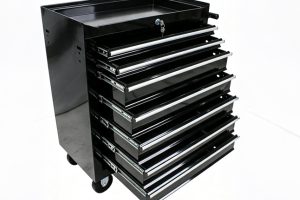
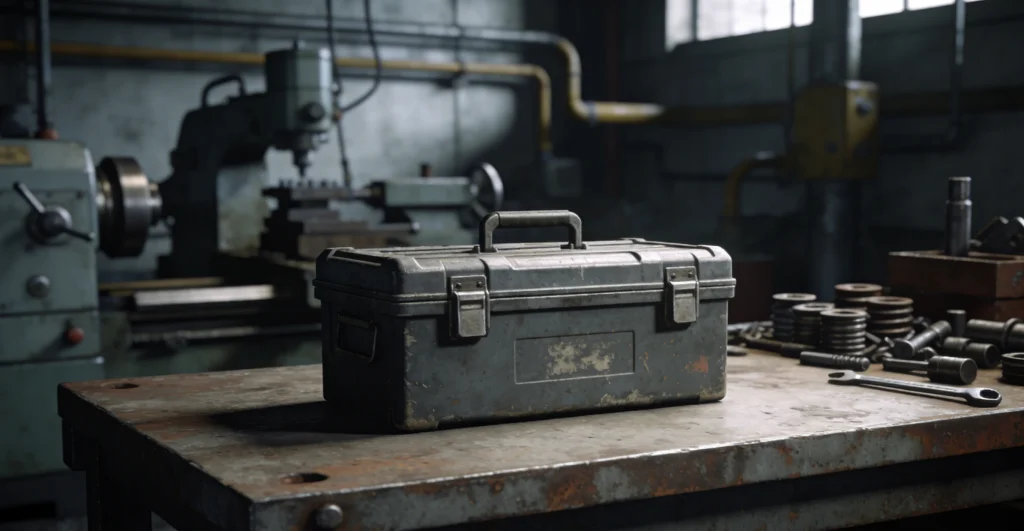
As the number of tools increases, ordinary tool cases can easily become insufficient in capacity, difficult to organize, and inconvenient to carry. Modular tool cases combine cases, compartments, trays, and internal accessories, allowing users to adjust the storage configuration according to the types of tools. When choosing a product, you should not focus only on the number of modules, but also consider the case strength, internal layout, portability, protection, and future customization options. For users in repair, engineering, equipment maintenance, and other industries who need to carry instruments and tools, the right product should be selected according to the actual working environment.
Choose the Right Modular Structure According to the Tool Types
Before choosing a modular tool case, you need to understand the dimensions, weight, and precision of the tools to be stored, as different tools have different requirements for the case structure.
Common Tools Are Better Suited to Clear Compartments
Proper compartmentalization helps improve the efficiency of finding and accessing tools.
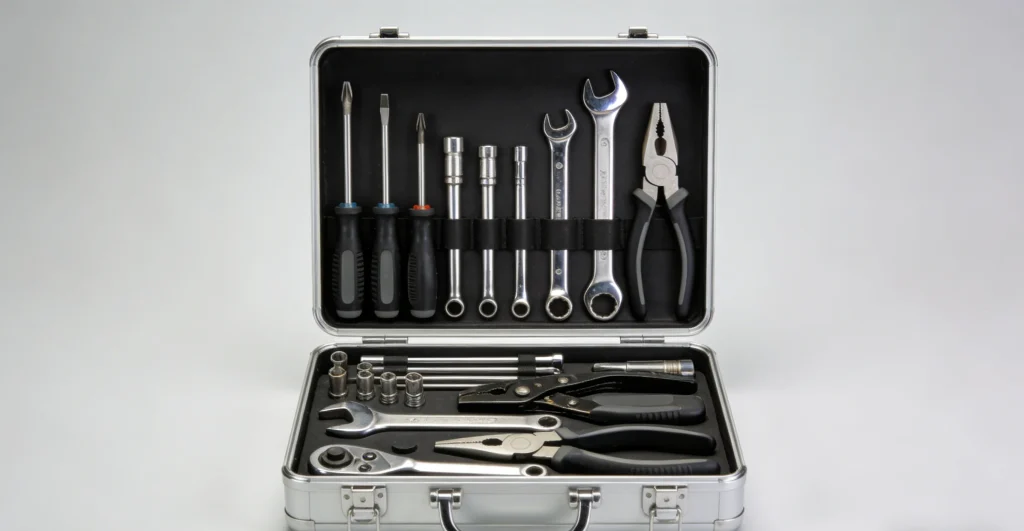
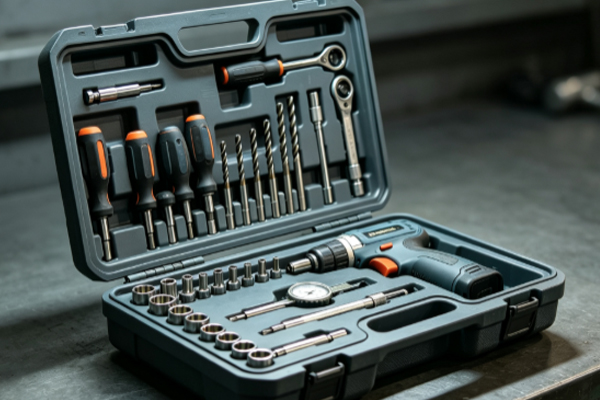
- Hand tools: Wrenches, screwdrivers, pliers, and similar tools can be organized through trays or dividers to reduce mixing.
- Small accessories: Parts such as screws, washers, and connectors are suitable for separate compartments, making them easier to view and access.
- Power tools: Larger tools such as electric drills and charging equipment require sufficient space, along with appropriate fixing or cushioning structures.
A well-designed internal layout can improve space utilization while reducing tool collisions and organization time.
Precision Equipment Requires Internal Protection
Testing instruments, electronic equipment, and precision tools have higher requirements for fixing and cushioning performance.
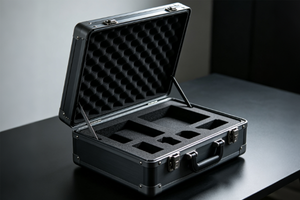
- Cushioning inserts: Foam or customized inserts can be designed according to the equipment’s contours to reduce movement during transportation.
- Separate fixing areas: Maintaining an appropriate distance between different devices helps reduce the risk of collision.
The internal protection structure should match the value, precision, and operating environment of the tools.
Case Materials and Structure Determine Long-Term Usability
The case material and structure affect the tool case’s load-bearing capacity, durability, and adaptability to different environments.
Choose the Case Material According to the Operating Environment
Different materials have their own characteristics in terms of weight, strength, protection, and appearance. Aluminum cases have a stable structure, a certain load-bearing capacity, and a distinctive metal finish, making them suitable for storing instruments, equipment, and professional tools. Engineering plastic cases are relatively lightweight, offer good impact resistance, and are convenient for frequent carrying and outdoor use. Some products can achieve an IP67 protection rating, making them suitable for engineering sites, transportation, and equipment storage. When choosing a case, you should consider the tool weight, transportation method, operating environment, and protection requirements.
Case Details Also Deserve Attention
In addition to the material, hardware components, sealing structures, and handle design also affect the actual user experience.
- Reinforced corners: These can reduce the risk of damage caused by impacts during handling and transportation.
- Latches and hinges: When the case is opened and closed frequently, the stability of the hardware can affect its service life.
- Sealing structure: For outdoor and transportation applications, pay attention to the lid gasket, latch compression structure, and the waterproof and dustproof rating specified for the product.
- Handle structure: After heavier tools are placed inside, the connection between the handle and the case must have sufficient load-bearing capacity.
These details are more valuable for evaluation than simply comparing the appearance of the case.
Modular Design Should Be Evaluated for Flexibility and Practical Efficiency
The value of modular design lies in its ability to adapt to different tools and tasks. Therefore, special attention should be paid to how easily the internal components can be adjusted and how convenient they are to use.
Internal Configurations Should Be Easy to Adjust
The ease of adjusting the internal components determines whether the tool case can accommodate tools of different sizes and types.
- Trays and dividers can be combined flexibly: Adjust the storage areas according to tool dimensions to improve space utilization.
- Customized inserts improve compatibility: For special equipment, dedicated fixing structures can be designed according to the product dimensions.
- Different cases can serve different functions: Daily tools, precision instruments, and spare parts can be managed separately using different types of cases.
Flexible configurations help reduce tool mixing and make it easier for companies to organize tools according to job roles and tasks.
Modularity Should Not Come at the Expense of Portability
Modular configurations need to maintain a balance between storage capacity and carrying convenience.
- Control the overall weight: As more modules are added, the overall weight also increases, so the actual carrying frequency should be considered when making a selection.
- Maintain a reasonable size: An oversized case may affect vehicle transportation, storage, and on-site operation.
- Consider access efficiency: Frequently used tools should be placed where they are easy to open and access, reducing the need for repeated organization.
A greater number of modules does not necessarily mean higher efficiency. A reasonable configuration should be designed around the actual workflow.
Evaluate Customization and Expansion Capabilities Based on Business Needs
When purchasing modular tool cases, companies should consider not only the current number of tools, but also future storage needs resulting from equipment additions, changes in job roles, and adjustments to transportation methods.
Businesses Should Pay More Attention to Customization Capabilities
Business users typically need to configure cases according to their equipment, job roles, and transportation methods. Foam, dividers, or fixing slots can be customized according to equipment dimensions to provide more suitable protection for instruments, equipment, and special tools. Cases with portable structures or impact-resistant, waterproof, dustproof, and sealing properties can also be selected according to transportation requirements. Tools can be organized according to roles such as repair, inspection, and installation. The closer a customized solution is to the actual workflow, the greater the practical value of the tool case.
Consider Both Current Needs and Future Use
In addition to meeting current storage requirements, you should also consider possible future changes in tools and equipment.
- When the number of tools increases: Additional cases can be added, or the internal configuration can be adjusted.
- When work requirements change: Existing trays, dividers, and inserts can be redesigned according to new equipment.
- When used in multiple scenarios: The same type of case can be configured differently for tool storage, equipment protection, sample transportation, and other needs.
For business users, considering whether a tool case can remain adaptable over the long term is more practical than simply comparing its initial capacity.
For hand tools, precision instruments, and outdoor equipment, case selection should be based on actual operating conditions. A well-designed storage solution can improve the management efficiency of tools, instruments, and accessories while reducing the inconvenience of carrying and organizing them. SIPHIA BOX specializes in tool cases, protective cases, aluminum cases, and customized storage solutions. Internal configurations can be designed according to the dimensions, operating environments, and transportation requirements of different tools and equipment, providing businesses with tool and equipment storage options that better suit their practical applications.