Automotive repair workstations handle a large number of tools in different sizes every day. From socket sets and wrenches to diagnostic equipment, pneumatic tools, and small spare parts, everything needs to remain organized within a limited space. Rolling tool cabinets typically combine drawer storage, mobility, and temporary work functions, so design details can directly affect the efficiency of repair technicians.
Drawer Layout Should Match the Sizes of Automotive Repair Tools
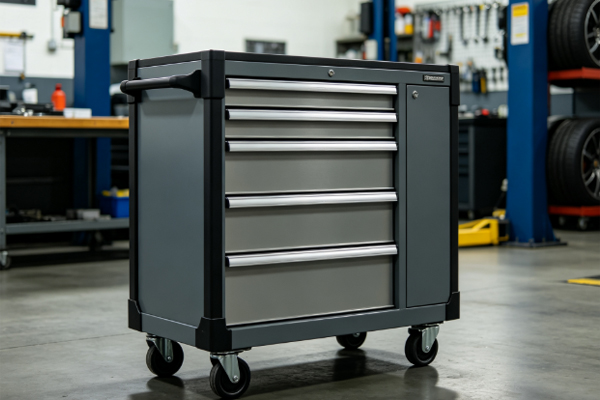
Automotive repair tools range from thin hand tools to deeper and bulkier equipment. Drawers with a single height are often unable to make full use of the available internal space. A combination of drawers in different sizes has become a common design for professional tool cabinets, allowing different tools to have corresponding storage locations.
Drawers of Different Heights Improve Space Utilization
Drawer dimensions should be planned according to the actual tool combination to avoid using large spaces for small tools while also preventing larger equipment from having nowhere to be stored.
- Shallow drawers: Suitable for commonly used hand tools such as wrenches, screwdrivers, pliers, and sockets.
- Medium drawers: Can store tool sets, ratchet wrenches, and commonly used repair accessories.
- Deep drawers: Suitable for larger pneumatic tools, specialized tools, and some diagnostic equipment.
With a reasonable combination of different drawer heights, the internal space can be used more efficiently.
Slide Rails and Drawer Load Capacity Need to Match
Once automotive repair tools are stored together, drawer loads can increase quickly, making slide rail quality and load capacity important considerations.
- Full-extension slides: Allow the drawer to extend fully, making it easier to access tools at the back.
- High-load-bearing structure: Maintains smooth opening and closing under full loads while reducing the risk of sagging and sticking during long-term use.
- Drawer stops: Reduce the possibility of drawers sliding open accidentally when the tool cabinet is being moved.
For high-frequency automotive repair workstations, a stable drawer system can reduce unnecessary interruptions during daily operations.
The Cabinet and Casters Should Adapt to the Automotive Workshop Environment
Automotive workshops typically involve heavy tools, frequent movement, and complex floor conditions. The cabinet’s structural rigidity and bottom structure need to work together to withstand long-term loads.
Cabinet Structure Determines Long-Term Load Capacity
A tool cabinet needs to support the weight of the cabinet body, drawers, tools, and work surface at the same time. Frame design and material strength should both be considered.
- Reinforced frame: Improves overall structural rigidity and reduces the risk of deformation after long-term heavy loading.
- Stable base: Allows the main load to be distributed more evenly to the casters and bottom structure.
- Impact-resistant corners: Reduce damage caused by collisions with vehicles, equipment, or other tools.
Some professional rolling tool cabinets use steel cabinet bodies, reinforced structures, and impact-resistant designs combined with high-load-bearing casters.
Caster Design Affects Mobility and Positioning
Automotive repair workstations often require the tool cabinet to be moved close to vehicles or lifts. The casters need to balance flexible steering with stable positioning. Swivel casters make direction changes easier, while fixed casters combined with swivel casters help control straight-line movement. Brakes can lock the cabinet in place after positioning to reduce unwanted movement. Heavy-duty tool cabinets should also be evaluated based on their rated load capacity rather than judging only by how easy they feel to push when empty.
The Work Surface and Internal Storage Should Support the Repair Process
The top of a rolling tool cabinet is not simply a cover. Many professional products are designed with the top as a work surface for placing parts, tools, and repair equipment.
The Work Surface Should Balance Operation and Maintenance
During automotive repair, technicians often need to temporarily disassemble parts or place diagnostic equipment on the work surface. The material and edge design of the surface can affect practical usability.
- Wear-resistant surface: Suitable for daily working conditions involving metal tools, parts, and oil contamination.
- Flat structure: Makes it easier to place diagnostic devices, parts, and tools currently in use.
- Protective edges: Reduce the chance of small items such as screws and washers sliding off the work surface.
Some professional tool cabinets also use stainless steel, ABS, or wooden work surfaces and may add auxiliary areas such as trays according to the repair application.
Internal Layout Should Reflect Frequency of Use
Tool organization should not be based only on dimensions. The operating sequence followed by repair technicians should also be considered.
- High-frequency tools such as wrenches and sockets can be placed in easily accessible drawers.
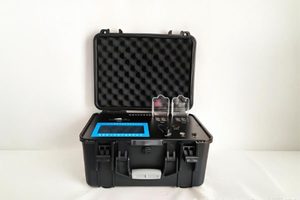
- Diagnostic instruments, multimeters, and similar equipment can be assigned dedicated areas with protective liners.
- Small accessories such as screws, clips, and washers can be organized in compartment boxes.
- Low-frequency specialized tools can be stored in deeper drawers or lower storage areas.
Aligning tool locations with actual repair operations can reduce the time spent repeatedly searching for equipment.
Safety Features and Customization Capabilities Affect Long-Term Use
Rolling tool cabinets operate in high-frequency working environments for extended periods. In addition to storage and mobility, attention should also be given to drawer safety, tool protection, and the ability to adjust the internal layout later.
Anti-Tip and Locking Structures Deserve Close Attention
A fully loaded tool cabinet can become quite heavy, while opening multiple drawers at the same time may also shift the overall center of gravity. Professional products typically incorporate corresponding safety features.
- Drawer interlock: Limits multiple drawers from being opened simultaneously, reducing risks caused by shifts in the center of gravity.
- Central locking: Allows drawers to be managed together and reduces unauthorized access to tools when the cabinet is not in use.
- Stable base: Appropriate wheel spacing, cabinet center of gravity, and caster configuration can help improve stability when the cabinet is stationary.
These structures have practical value for repair workstations that remain under heavy loads for long periods.
Adjust the Internal Structure According to the Tool Configuration
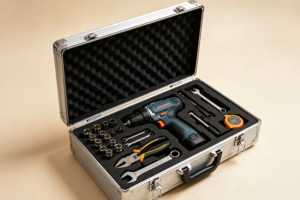
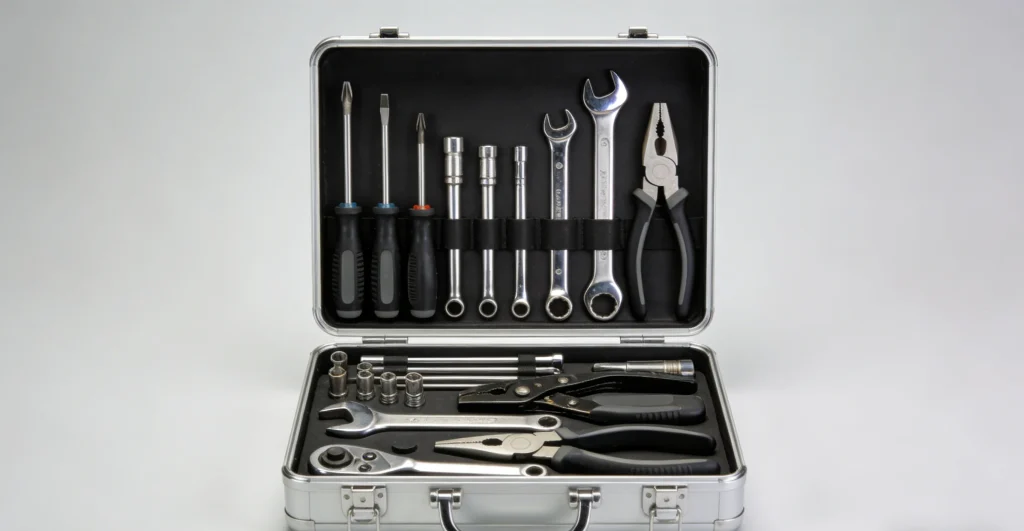
Different automotive repair shops use different combinations of tools, so standardized layouts may not make full use of the available space. Internal customization can be planned around actual tools. EVA liners can hold tools according to their contours, compartment storage can keep small parts separately organized, drawer configurations can arrange storage heights according to tool proportions, and external accessories such as pegboards and hooks can be added according to usage habits.
For the automotive repair industry, a suitable rolling tool cabinet should match the workstation layout, tool combination, and repair habits. SIPHIA BOX specializes in toolboxes, protective cases, aluminum cases, and customized storage solutions. Its internal structures can be planned around actual requirements to provide flexible storage and protection solutions for automotive repair, equipment maintenance, inspection, and professional applications.