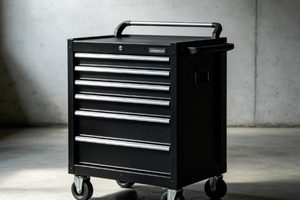
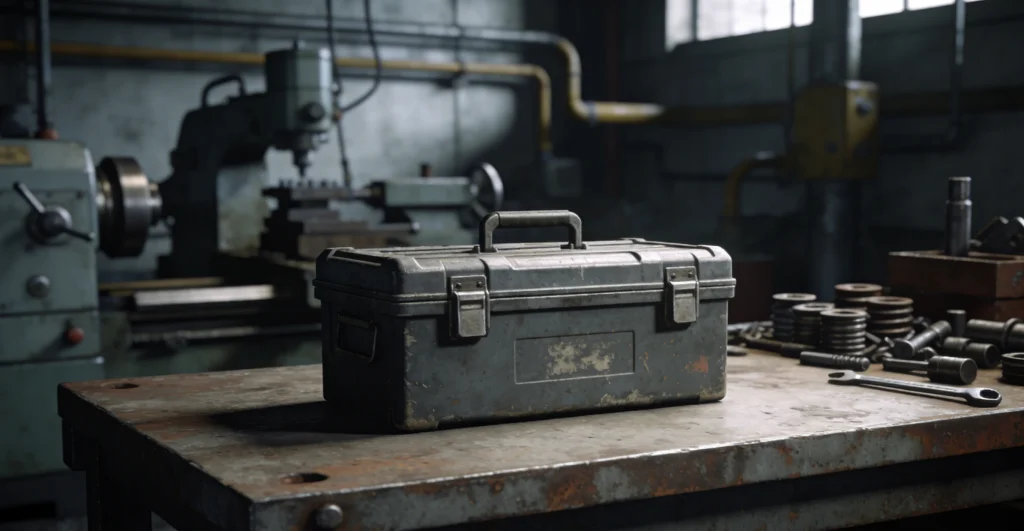
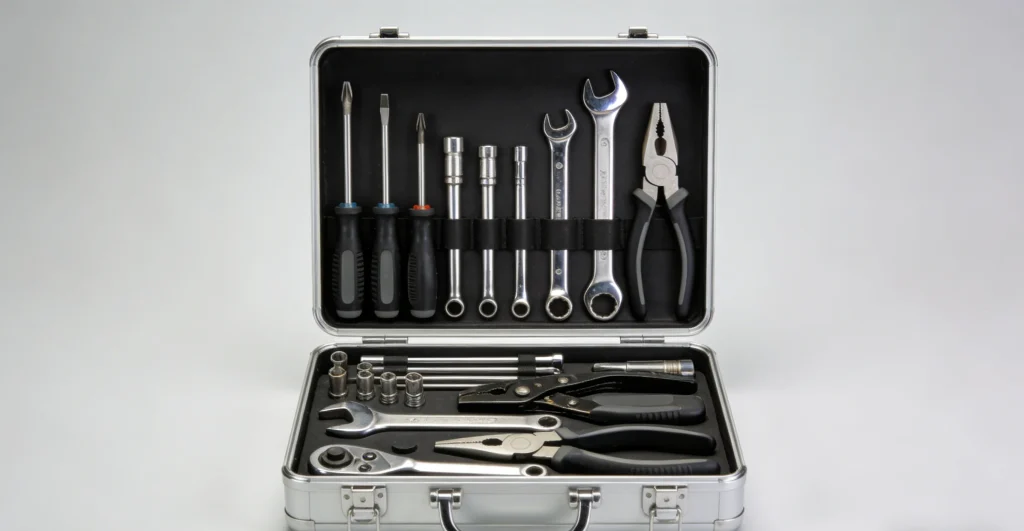
Large tool boxes may look quite similar, but once you actually buy one and start using it, the differences in size become very noticeable. If the box is too small, wrenches, sockets, and power tools get squeezed together, and you may have to search through everything just to find one tool. If the box is too large, it can become heavy and take up too much space when fully loaded, making it difficult to move. Auto repair shops, mechanical repair workshops, and equipment maintenance workstations also have different tool storage needs. So, how do you choose the right large tool box size? Start by looking at the number of tools you have and the size of your largest tools, then consider the available space before deciding on the overall box size. This makes it much easier to avoid choosing the wrong tool box.
What Are the Common Sizes of Large Tool Boxes? What Size Is More Practical?
Large tool boxes on the market come in a wide range of sizes. Widths generally range from around 800 mm to more than 1,500 mm, depths are commonly around 450–700 mm, and heights are often around 800–1,200 mm. A wider tool box does not necessarily provide a better user experience. For a standard repair workstation, a model around 1,000–1,200 mm wide can already provide plenty of storage space. Auto repair shops and mechanical repair workshops with a large number of tools may consider wider heavy-duty tool cabinets.
- 800–900 mm wide: Suitable for technicians with a limited number of tools and relatively easy to fit into smaller work areas.
- 1,000–1,200 mm wide: Offers a good balance of storage capacity, allowing wrenches, sockets, screwdrivers, pliers, and repair accessories to be organized separately.
- 1,200–1,500 mm wide: More suitable for professional workstations, especially when the tool collection is large and continues to grow.
- Over 1,500 mm: More suitable for large fixed tool cabinets, so the workshop layout and available aisle space should be checked before purchasing.
If the tool box is mainly placed at a fixed maintenance workstation, storage capacity can be the priority. If you need to push the tool box around every day, however, don’t simply choose an oversized model. The weight and stability of the fully loaded tool box are equally important.
How Deep Should Large Tool Box Drawers Be? How Should Different Tools Be Stored?
When choosing a large tool box, the internal drawer dimensions are more important than the external dimensions. Common drawer depths are around 350–550 mm. Shallow drawers can be made lower for storing small tools, while deeper bottom drawers are suitable for drills, cordless tools, and larger maintenance equipment. When purchasing, measure some of your largest tools and check whether they can be placed flat inside the drawers and removed easily.
- Shallow drawers: Suitable for screwdrivers, hex keys, small wrenches, measuring tools, and loose screws or accessories.
- Medium-depth drawers: More suitable for combination wrenches, ratchet handles, socket sets, and commonly used hand tools.
- Deep drawers: Can be used for drills, cordless tools, and larger mechanical equipment.
- Drawers with dividers: More suitable for screws, washers, fittings, and other small parts that can easily become mixed together.
Some tool boxes look wide from the outside, but the actual drawer height is relatively low, making it difficult to store large sockets or power tools. So when looking at large tool box sizes, don’t focus only on the advertised length, width, and height. The actual usable internal space is more important.
How Large Should a Large Tool Box Be? Tool Quantity Is the Key
If you don’t know what size large tool box you should buy, take all your existing tools out and organize them first. Put wrenches, sockets, screwdrivers, pliers, power tools, and repair accessories into separate groups. You will quickly see which tools take up the most space. If you have relatively few tools but buy an oversized tool cabinet, many drawers may remain empty for a long time. If you already have a large collection of tools but choose a small tool box, the storage space will soon become overcrowded.
- Fewer tools: If you mainly use common hand tools, you can choose a more compact model without reserving too many empty drawers.
- A growing tool collection: It is a good idea to leave some extra storage space for future additions, otherwise you may have to reorganize everything after buying a few new tool sets.
- Large tools: Rather than simply increasing the number of drawers, pay more attention to drawer height and depth.
- Many different types of tools: A wider tool cabinet can make it easier to separate everyday tools, specialized tools, and backup tools.
There is also a small but useful trick: don’t divide all the drawers equally according to tool type. Frequently used tools should be placed in easy-to-reach drawers, while tools that are only used occasionally can be stored in the bottom drawers. This makes everyday work much easier.
How Do You Choose the Size of a Large Mobile Tool Box? What If It Needs to Be Moved Frequently?
If the tool box needs to be moved around the workshop, warehouse, or next to different pieces of equipment every day, storage capacity is only one consideration. Once a large tool box is fully loaded, its weight increases significantly, putting greater pressure on the casters, handle, drawer locking system, and overall structure. An oversized tool box may also make turning and passing through narrow aisles more difficult. For mobile tool boxes, it is better to find a balance between storage capacity and mobility. When purchasing, check whether the casters are strong enough, whether the handle feels stable, and whether the drawers can remain securely locked while the tool box is moving. In workplaces with rough floors, also pay particular attention to how stable the casters remain when passing over thresholds and small steps.
What Other Details Should You Consider When Choosing a Large Tool Box Size?
Many people focus entirely on the external dimensions of a tool box while overlooking the available placement space. If the tool box is placed against a wall, measure the working area in front of it in advance to make sure the drawers can be fully opened without blocking the walkway. If it is placed next to a workbench, consider whether the height of the tool box will affect normal work. You should also check the load capacity of the drawer slides, drawer operation, locking system, casters, and box material. For tool boxes that regularly hold heavy wrenches and socket sets, long-term use places higher demands on structural strength.
There is no single fixed answer to how large a large tool box should be. For general repair work, a medium-capacity model may be enough. For auto repair and mechanical maintenance with a large number of tools, a wider heavy-duty tool cabinet may be more suitable, while a fixed maintenance workstation can prioritize greater storage capacity. Before buying, consider the size of your largest tools, the number of tools you have, the available placement space, and whether the tool box needs to be moved frequently. Then compare the box width, depth, and drawer specifications to avoid ending up with a tool box that is too small to hold everything or so large that you cannot make good use of the extra space.