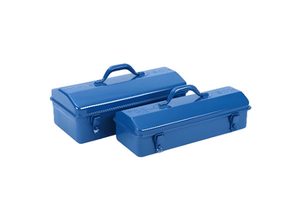
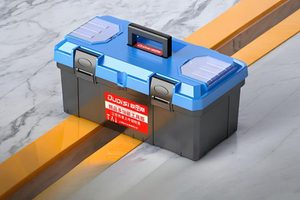
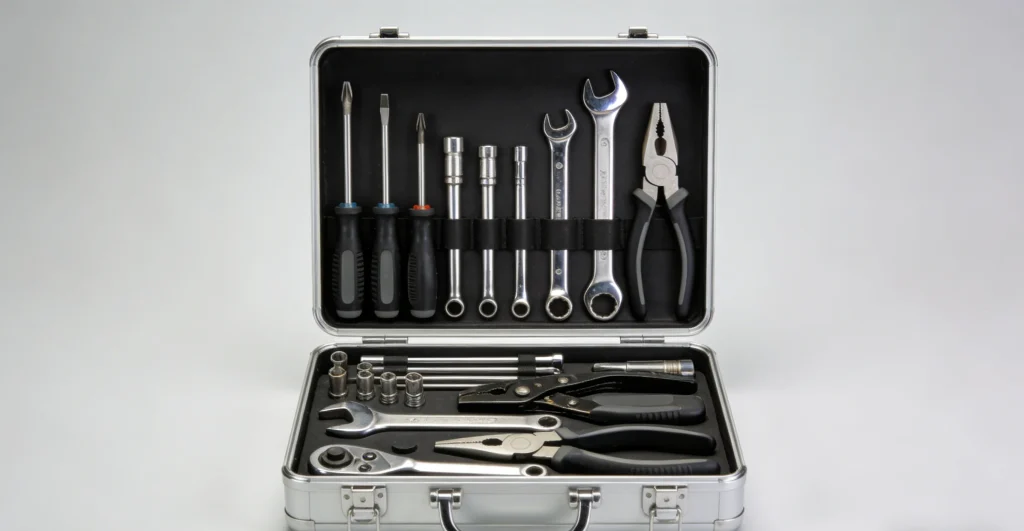
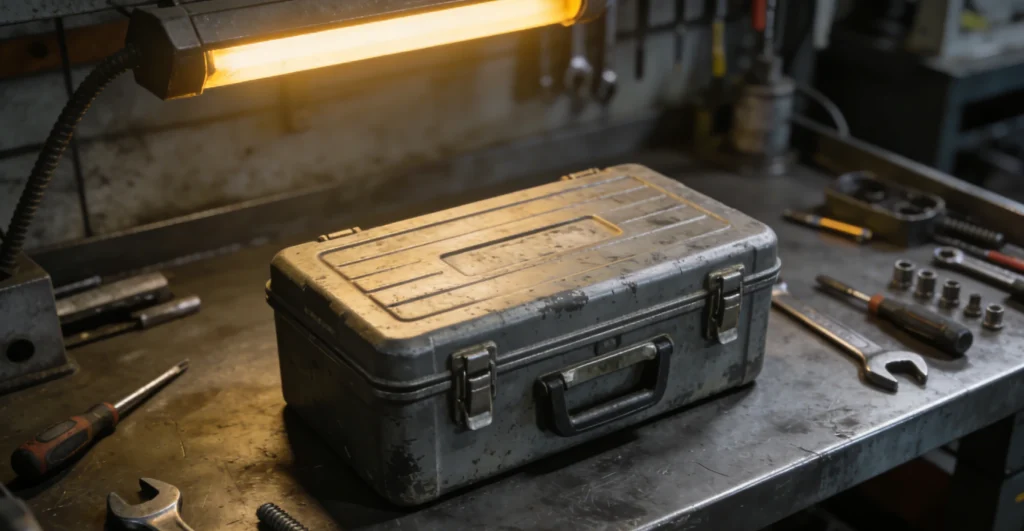
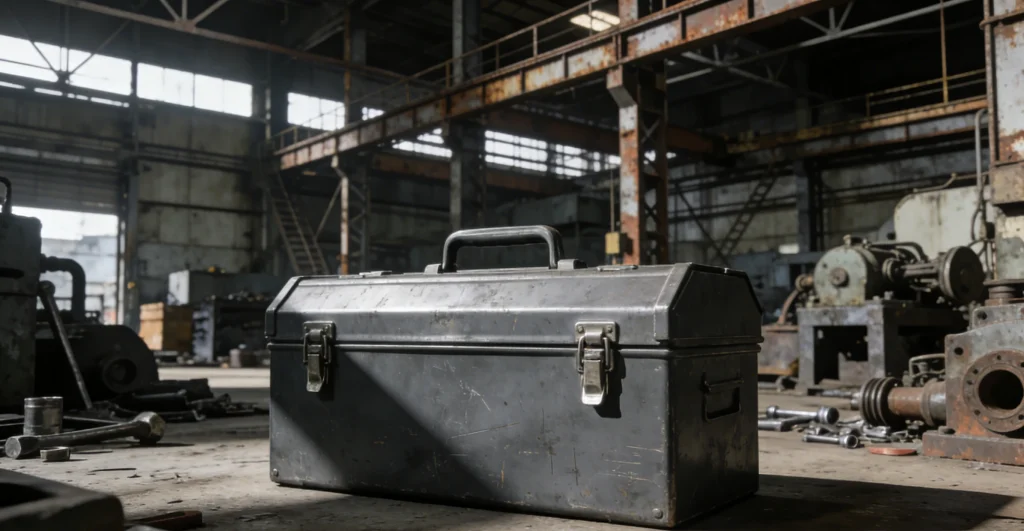
Although a mini toolbox is compact, it can be used to store many small tools that are frequently needed for everyday tasks. Household repairs, office equipment maintenance, DIY projects, electronic equipment assembly, and basic bicycle maintenance may all require screwdrivers, pliers, wrenches, hex tools, and various small accessories. Keeping these tools together in a mini toolbox can reduce clutter in drawers, cabinets, and workbenches while making it easier to quickly find the required item. However, different tools vary in length, width, and shape, so not every tool is equally suitable for every mini toolbox. Choosing an appropriate storage combination requires consideration of tool dimensions, frequency of use, and the internal configuration of the toolbox, allowing the available storage space to be used more efficiently.
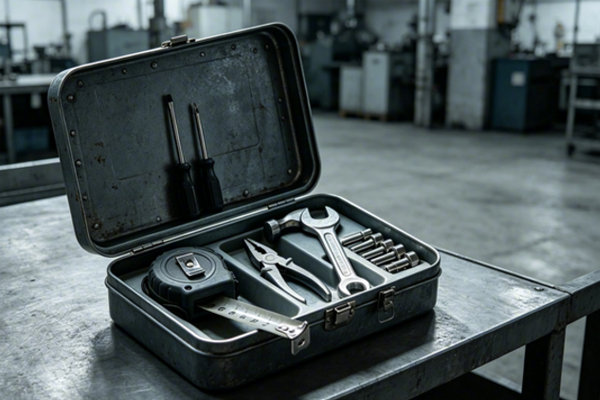
Screwdrivers and Bits Are Ideal for Mini Toolbox Storage
Screwdrivers are among the most common hand tools used for everyday repairs and are also relatively easy to organize inside a mini toolbox. Phillips screwdrivers, flat-head screwdrivers, and small screwdrivers in different sizes generally have suitable dimensions for slots, trays, or elongated storage areas inside compact toolboxes. For household maintenance, keeping several commonly used screwdriver sizes together can support furniture assembly, hardware adjustment, and basic equipment maintenance.
Screwdriver bits are usually smaller than complete screwdrivers, making them especially suitable for small compartments or dedicated storage sections. Phillips bits, Torx bits, hex bits, and other types can be organized according to their specifications to prevent different models from becoming mixed together. Mini toolboxes with individual compartments are particularly useful for storing these small tools.
Precision screwdrivers are also well suited to compact toolboxes. Electronic equipment, eyeglasses, models, and small devices often require precision screwdrivers in different sizes. Because these tools are relatively small, they can be arranged in narrow slots inside the toolbox, reducing unnecessary contact between individual tools.
If a toolbox needs to hold several screwdrivers, a model with dedicated tool slots can be useful. This configuration improves space utilization and helps keep each tool in a fixed position, making it easier to locate the required size.
Pliers and Small Wrenches Can Be Stored Together
Pliers and wrenches are also common tools that can be kept in a mini toolbox. Needle-nose pliers, diagonal cutters, small combination pliers, and mini adjustable wrenches can generally be placed in the main storage compartment. Compared with screwdrivers, these tools are usually wider, so the internal width and depth of the toolbox should be considered.
Small wrenches can be arranged according to their sizes. Different types, including open-end wrenches, box-end wrenches, and combination wrenches, can be stored in the same section. Proper arrangement reduces overlapping between tools and makes it easier to select the appropriate wrench for a particular nut or bolt.
Pliers usually have relatively wide handles that require additional storage space. If the mini toolbox has adjustable dividers, the storage area can be reorganized according to the width of the pliers. For users who need to carry several types of pliers, a model with a wider internal compartment can provide greater convenience.
These tools can also have a relatively high weight compared with small accessories. When storing them, the load-bearing capability of the toolbox should be considered. Placing heavier pliers and wrenches toward the bottom can help maintain better balance when the toolbox is being carried.
Hex Tools and Measuring Tools Can Use Narrow Storage Areas
Hex keys, Allen tools, short sockets, and compact measuring tools often have elongated shapes, making them suitable for narrow storage areas inside a mini toolbox. Bicycle maintenance, furniture assembly, mechanical adjustments, and DIY projects frequently require different sizes of hex tools.
Hex keys can be arranged according to their sizes. If the toolbox includes dedicated slots, different tools can remain neatly organized. If no specific slots are available, a small tool pouch or separate holder can be used to prevent different sizes from becoming mixed together.
Measuring tapes and rulers can also be stored in a mini toolbox with sufficient capacity. However, users should confirm the internal length of the box before choosing a model. If the measuring tape or ruler is relatively large, a toolbox with greater internal dimensions may be necessary.
Some mini toolboxes can also accommodate small spirit levels, depth gauges, or other portable measuring instruments. For DIY users, storing measuring tools together with screwdrivers and hex keys can create a more complete compact tool set.
Screws, Nuts, and Connectors Are Suitable for Separate Compartments
In addition to hand tools, mini toolboxes can be useful for storing various small hardware components. Screws, nuts, washers, springs, rivets, and connectors are small and can easily become scattered or lost when stored together with larger tools. A mini toolbox with individual compartments can organize these components according to their specifications.
Small parts can be classified according to diameter, length, model, or intended application. For example, furniture assembly screws can be stored in one compartment, while small screws for electronic equipment can be kept in another. Washers and nuts can also be separated. This arrangement reduces confusion between components with similar appearances.
A mini toolbox intended for small parts should ideally have a well-designed compartment system. When each compartment is separated, moving the toolbox is less likely to cause all the components to mix together. This type of storage is particularly useful for DIY projects, model assembly, and repair work.
The number of small components often increases during continued use, so it can be useful to leave several compartments available for future additions. This eliminates the need to purchase a new storage solution every time new screws or connectors are added.
Precision and DIY Tools Are Also Suitable for Compact Storage
Mini toolboxes can also be used to organize precision tools and DIY equipment. Electronic repair commonly involves tweezers, precision screwdrivers, plastic pry tools, fine cutters, and similar equipment. These tools are relatively small and are well suited to toolboxes with detailed internal compartments. Keeping them together reduces the difficulty of finding individual tools when they are mixed with larger hand tools.
Model making and handicraft projects can also involve many small tools. Model cutters, carving tools, tweezers, small files, engraving tools, and miniature measuring instruments can be organized according to their dimensions inside an appropriate mini toolbox. For DIY users who frequently move between work areas, a compact toolbox can also keep an entire set of tools together for convenient transportation.
Common tools can be configured according to their intended applications:
- Household repair tools: Screwdrivers, adjustable wrenches, needle-nose pliers, hex keys, and measuring tapes.
- Electronic repair tools: Precision screwdrivers, tweezers, fine pliers, screwdriver bits, and plastic pry tools.
- DIY tools: Small files, cutters, carving tools, hex tools, and measuring instruments.
- Bicycle maintenance tools: Hex keys, small wrenches, screwdrivers, and basic adjustment tools.
- Hardware components: Screws, nuts, washers, springs, rivets, and connectors in different specifications.
Different tools require different storage configurations. Long and narrow tools are suitable for slots, wider pliers and wrenches require larger main compartments, and small components are better suited to individual sections. Combining tools according to their shapes and storage requirements can improve the use of available space and make organization easier.
A mini toolbox is suitable for more than just a few commonly used screwdrivers. Depending on its capacity and internal configuration, it can also organize pliers, wrenches, hex tools, measuring instruments, precision repair tools, and various hardware components. Before choosing a product, users can identify the tools they need to store and then check the toolbox length, depth, number of compartments, and slot configuration. Household users can prioritize basic repair tools, DIY enthusiasts can add precision tools and small accessories, while maintenance professionals can create dedicated tool combinations based on specific tasks. Matching the tools with an appropriate storage structure allows a mini toolbox to provide clearer and more convenient tool management within a compact space.