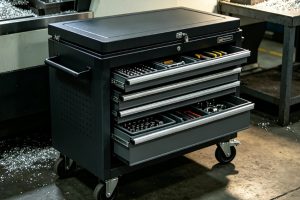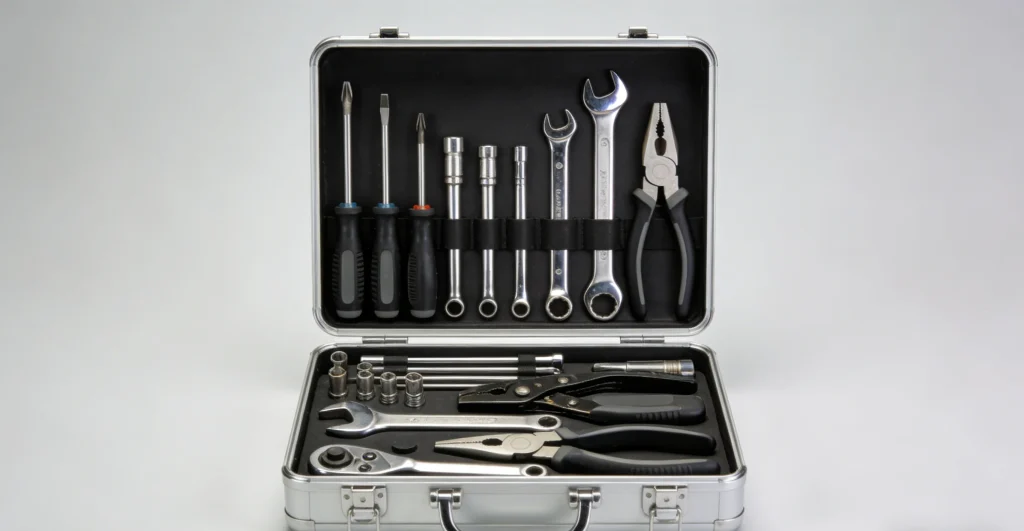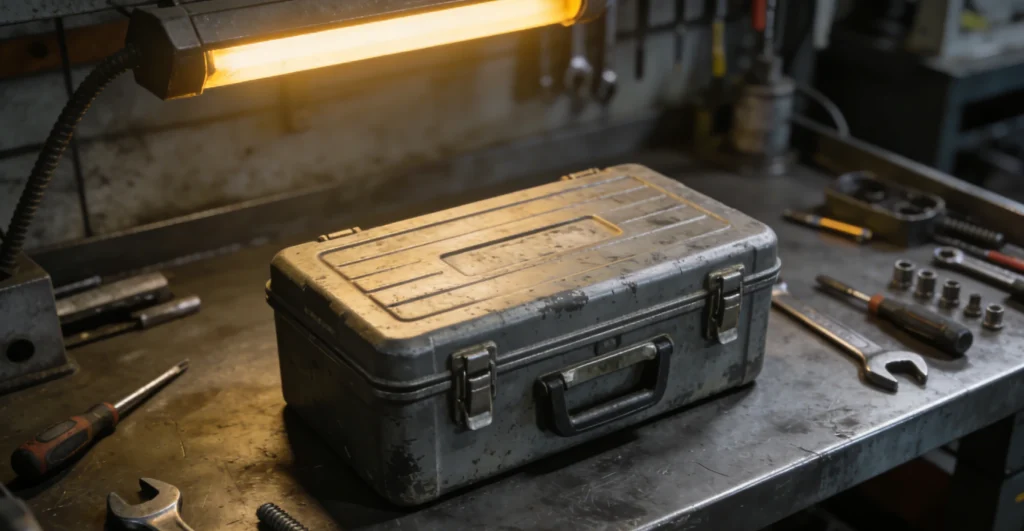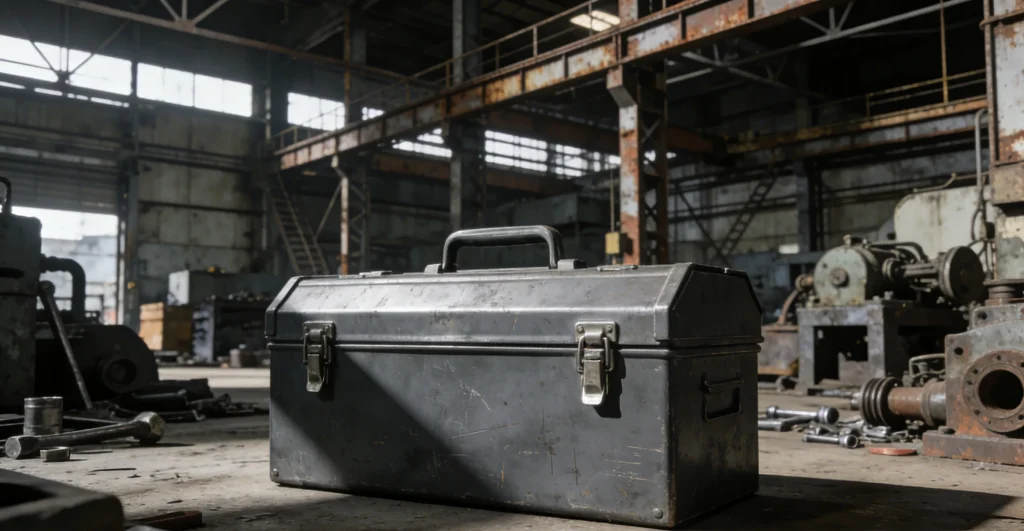
Mechanical tool boxes are widely used in repair workshops, automotive maintenance, equipment servicing, and industrial production environments. Among them, tool boxes with drawer structures allow workers to store wrenches, screwdrivers, sockets, measuring tools, and other items by category, improving tool management efficiency. However, as the service time increases, tool box drawers may experience problems such as difficult pulling, poor opening performance, or incomplete closing, which affects the efficiency of daily tool access. Mechanical tool box drawer sticking may be related to dust accumulation on the slides, insufficient lubrication, overloaded tools, drawer deformation, or installation position deviation.
Especially in factories, repair workshops, and other environments, metal debris, oil stains, and dust can easily enter the slide rails. After long-term accumulation, these contaminants increase friction resistance, making the drawer more difficult to operate. If slight sticking occurs, it should be checked and handled promptly to prevent the problem from becoming more serious. Continuously forcing the drawer open or closed may not only damage the slide rails but also cause deformation of the drawer structure, making future repairs more difficult. Through proper cleaning, adjustment, and maintenance, the drawer can return to normal operating conditions while extending the service life of the mechanical tool box.
Methods to Solve Mechanical Tool Box Drawer Sticking Problems
Clean the Slide Rail Debris
The most common cause of mechanical tool box drawer sticking is the accumulation of dust, metal chips, or oil stains inside the slide rails. Since repair environments often involve metal processing, lubricating oils, and equipment parts, debris can easily enter the drawer sliding area. When the surface of the slide rail becomes rough, greater friction is generated during drawer movement, resulting in difficulty when pulling the drawer. During maintenance, first pull the drawer out completely. If the tool box structure allows, the drawer can be removed directly for inspection. Use a brush, air gun, or clean cloth to remove dust and debris from the slide rail surface, then check whether there is abnormal wear on the slide rail.
During cleaning, attention can be paid to the following areas:
Slide Rail Connection Areas: The rollers, ball bearings, or sliding contact areas on both sides of the slide rails are prone to accumulating dirt and should be cleaned carefully. If debris remains in these areas, the drawer may still stick even if the slide rail surface appears clean.
Drawer Bottom Area: Some tool box drawers store heavy tools for long periods, causing metal powder and oil stains to accumulate at the bottom. Regular cleaning is necessary to prevent contamination of the sliding structure.
Slide Rail Gap Areas: Small dust particles entering the inside of the slide rail are not always visible directly. Compressed air can be used to blow out hidden debris and improve cleaning effectiveness.
After cleaning, repeatedly push and pull the drawer several times to check whether the sticking problem has improved. If the drawer operates smoothly again, it indicates that the main issue was caused by debris interference.
Check Lubrication Conditions and Installation Position
In addition to dust contamination, mechanical tool box drawers may also experience increased operating resistance due to insufficient lubrication. After long-term use, the original lubricating oil on the slide rails gradually decreases, increasing friction between metal components and causing noticeable resistance when pulling the drawer. During maintenance, after cleaning, apply an appropriate amount of lubricant to the moving areas of the slide rails. When selecting lubrication products, the working environment should be considered. For example, ordinary maintenance environments can use mechanical lubricating oil, while dusty working areas may require lubricants that are less likely to attract contaminants. Besides lubrication problems, the installation condition of the drawer should also be checked. Some tool boxes carry heavy tools for long periods, which may cause slight drawer tilting. This results in uneven force distribution on both sides of the slide rails and unstable drawer operation.
During inspection, pay attention to the following points:
Whether the Drawer Is Level:
If one side of the drawer is higher and the other side is lower after closing, it may indicate installation deviation and require adjustment of the fixing position.
Whether the Slide Rail Is Deformed:
Metal slide rails may bend or experience clearance changes after excessive pressure, causing the drawer to move improperly.
Whether the Screws Are Loose:
Loose slide rail fixing screws can cause the slide rail position to shift, affecting drawer operation.
By adjusting the slide rail position and restoring proper lubrication, the sticking problem of mechanical tool box drawers can be effectively improved.
Frequently Asked Questions
What should I do if a mechanical tool box drawer cannot be opened?
If the drawer cannot be opened completely, it is not recommended to use excessive force to pull it directly. Forced operation may break the slide rail or damage the drawer panel. First, check whether heavy tools are stored inside the drawer and confirm whether excessive weight is causing pressure on the slide rails. If there are too many tools, remove some items and then gently push and pull the drawer again. If it still cannot be opened, check whether foreign objects are blocking the slide rails or whether the drawer has become deformed. For severely stuck drawers, part of the fixing structure may need to be removed for further handling.
How often should mechanical tool box drawers be maintained?
The maintenance frequency depends on the working environment. If the tool box is mainly used for ordinary repair work, the condition of the slide rails can be checked every few months. If it is used in factories, construction sites, or other dusty environments for long periods, inspection frequency should be increased. During daily use, keeping the drawer interior clean and avoiding placing tools with excessive oil stains or moisture inside can also reduce the occurrence of sticking problems.
When a mechanical tool box drawer becomes stuck, the specific cause should be identified first, followed by the appropriate solution. Common causes usually include dust accumulation on slide rails, insufficient lubrication, excessive tool weight, and installation deviation. During maintenance, debris inside the slide rails should be cleaned first, followed by checking the slide rail condition and applying lubrication or making adjustments when necessary. If the slide rails are severely deformed or damaged, related components should be replaced to prevent further impact on tool box usage. During daily operation, avoid storing tools with excessive loads for long periods, regularly clean the drawer interior and slide rail areas, and maintain a relatively dry working environment for the tool box. Proper maintenance of mechanical tool box drawers can not only reduce sticking problems but also improve tool access efficiency, making repair work smoother and more convenient.