Although a mini toolbox is compact, bigger is not always better, and a smaller toolbox is not necessarily more convenient. Different users have different requirements for the number of tools, tool sizes, and working environments. Choosing an unsuitable capacity may result in insufficient storage space, wasted internal room, or reduced portability. A household user may only need screwdrivers, pliers, and wrenches for basic maintenance, while a DIY enthusiast may also need screwdriver bits, measuring tools, and various small accessories. Electronic repair users may pay greater attention to organizing precision tools and small components. When purchasing a mini toolbox, the capacity should therefore be selected according to the actual tool collection so that the available space can be used efficiently.
Determine the Basic Capacity Based on the Number of Commonly Used Tools
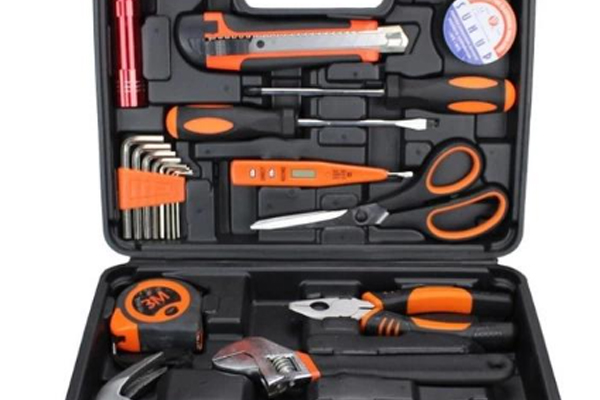
When choosing the capacity of a mini toolbox, it is useful to begin by listing the tools that will regularly be stored inside. Instead of judging storage capacity only by the external dimensions of the toolbox, consider screwdrivers, wrenches, pliers, measuring tapes, hex keys, screwdriver bits, and small accessories that need to be kept together.
If only a few basic tools are used regularly, a small-capacity mini toolbox may be sufficient. These products are generally lightweight and suitable for storage in household drawers, office cabinets, or vehicle compartments. For users who need to carry a small selection of tools for occasional repairs, a compact toolbox can also reduce unnecessary carrying weight.
If the number of commonly used tools reaches a dozen or more, a model with greater internal space may be more appropriate. As the number of tools increases, it is not enough to simply check whether all of them can fit inside. Some space should remain available for removing and replacing tools. When tools are packed too tightly, the nominal capacity may appear sufficient, but accessing individual tools can become inconvenient.
For a toolbox intended for long-term use, it is better not to choose a capacity that is exactly filled by the current tool collection. Leaving some additional space makes it easier to add new tools later and reduces unnecessary pressure between stored items. Therefore, the current number of tools is only the starting point; future storage requirements should also be considered.
Check Tool Dimensions to Determine Whether the Internal Space Is Sufficient
The same number of tools does not necessarily require the same toolbox capacity. For example, ten precision screwdrivers may take up much less space than ten different-sized wrenches. Tool length, width, thickness, and handle dimensions can all affect the required internal storage space.
Long and narrow tools require sufficient storage length. Screwdrivers, hex keys, socket tools, and certain measuring instruments may not fit properly if the toolbox is too short. When selecting a product, users should therefore check the effective internal dimensions instead of focusing only on the external length, width, and height.
Larger tools require more horizontal space. Pliers, adjustable wrenches, and small hammers may have relatively wide handles or heads. If the internal area is too narrow, these tools can interfere with other items. A mini toolbox with adjustable dividers or a larger main compartment may be more suitable for such tool collections.
Tool dimensions also influence internal organization. If various tools with different sizes need to be stored together, a toolbox with compartmentalized storage can be a practical choice. Efficient internal space allows tools of different dimensions to remain in designated positions instead of becoming piled together, helping maintain useful storage capacity.
Select the Capacity According to the Intended Application
The capacity of a mini toolbox should also be matched with the actual working environment. Household repairs, office maintenance, DIY projects, automotive tool storage, and electronic equipment repairs all require different tool combinations. Choosing a product simply because it is labeled as a “mini toolbox” may overlook important storage requirements.
Household users generally need screwdrivers, pliers, adjustable wrenches, measuring tapes, hex keys, and other basic tools. These applications usually do not require a large toolbox. A compact model can keep essential tools together while remaining easy to store inside a cabinet or drawer.
Office environments may require fewer tools, but users may need to store screwdrivers, precision bits, tweezers, cutters, and a small number of spare components. In this situation, a mini toolbox with small compartments may be more useful than simply choosing a larger box.
DIY tool collections are often more varied. Model making, handicrafts, electronic projects, and small assembly work may involve different screwdrivers, tweezers, cutters, rulers, screwdriver bits, and numerous small components. These users can consider a mini toolbox with slightly greater capacity and prioritize models with multiple compartments.
Basic automotive and bicycle maintenance requires attention to tool dimensions. Wrenches, sockets, hex tools, and similar equipment can take up considerable space. If several sizes need to be carried together, a toolbox with sufficient internal depth and length should be selected.
Leave Reasonable Extra Space to Avoid Insufficient or Excessive Capacity
Choosing the capacity of a mini toolbox is not simply a matter of selecting the largest available model. If the toolbox is much larger than the actual tool collection, it may lose some of the lightweight and portable advantages associated with mini toolboxes. Excessive empty space can also allow tools to move around inside the box and collide during transportation.
An undersized toolbox can create different problems. When tools are forced into a space that is too small, they may become difficult to remove and can place unnecessary pressure on internal dividers, compartments, or the lid. If the lid cannot close properly, the overall usability of the toolbox can also be affected.
The following guidelines can help when selecting capacity:
- Small number of basic tools: Choose a compact model and prioritize portability and space efficiency.
- Medium number of tools: Consider a mini toolbox with dividers or trays for better organization.
- Tools with significantly different dimensions: Choose a model with a relatively spacious main compartment and flexible storage configuration.
- Large number of small components: Prioritize separate compartments rather than simply selecting a larger box.
- Possibility of adding more tools later: Leave some extra storage space to avoid replacing the toolbox in the near future.
With a reasonable amount of unused capacity, tools can be arranged more naturally and additional commonly used items can be added later. The actual capacity should therefore remain appropriately matched to the user’s needs.
Evaluate the Internal Structure to Determine the Actual Usable Capacity
When purchasing a mini toolbox, the stated capacity does not always represent the actual storage experience. Two toolboxes with similar external dimensions may provide significantly different usable storage space because of differences in their internal structures. Therefore, users should consider how the internal area is divided in addition to checking the overall dimensions.
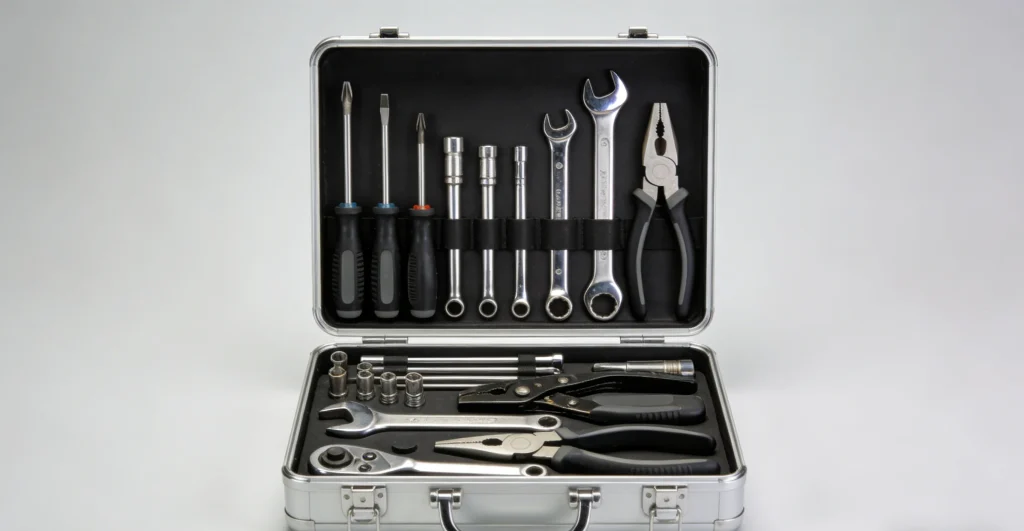
A toolbox with a single large compartment can accommodate relatively large tools, but small components may become mixed together. Products with fixed tool slots are suitable for organizing elongated items such as screwdrivers and hex keys, while models with individual compartments are more suitable for screws, nuts, washers, and other small accessories. If adjustable dividers are included, users can reorganize the storage areas according to the dimensions of their tools.
Tray systems can also improve the use of vertical space. Frequently used small tools can be placed in the upper tray, while larger items can be stored underneath. For mini toolboxes with limited height, this type of multi-level storage can increase effective storage capacity without significantly increasing the footprint of the product.
For toolbox sellers, product descriptions can include external dimensions, effective internal dimensions, recommended tool types, and storage examples. This makes it easier for customers to determine whether a toolbox matches their tool collection. When selecting a mini toolbox, users should consider the number of tools, individual tool dimensions, intended application, future expansion requirements, and internal storage configuration rather than choosing a product based only on its external size.
The right mini toolbox capacity should meet current storage requirements while leaving sufficient room for organization and future additions. A toolbox that is too small can make tool placement and access difficult, while an oversized model may increase weight and storage requirements. By determining the basic capacity according to the number of tools, checking the internal space against tool dimensions, and considering applications such as household repairs, office maintenance, DIY projects, and vehicle servicing, users can select a mini toolbox that balances storage efficiency, portability, and long-term practicality.